
I didn’t wake up one morning thinking, “Today I’ll understand Uluwatu.”
That’s not how it works.
Uluwatu isn’t something you get in one visit, or even two. It’s more like a place that slowly seeps into you. At first, it’s just cliffs and ocean. Then, a few days later, you notice how quiet your thoughts become. A week later, you realize you’ve stopped checking the time so often.
This Uluwatu travel guide isn’t neat. It doesn’t try to be. It’s more like notes I’d send you if you asked, “So… what’s Uluwatu actually like?” And I answered honestly, without trying to sound clever.
Arriving Without Expectation
The road into Uluwatu feels different from the start. Less traffic. More sky. Fewer signs telling you what to do next. You pass stretches of land that feel almost empty, then suddenly there’s a café, a surf shop, a turn toward the sea.
I remember thinking, Is this it?
And then five minutes later, realizing I was already slowing down.
That’s the first lesson in this Uluwatu travel guide: don’t arrive with a checklist. If you do, Uluwatu will quietly ignore it.
Why the Cliffs Matter More Than the Beaches
Yes, people come here for beaches. But the cliffs are the real story.
Standing on the edge, looking down, you feel distance. Not emotional distance, but physical. The ocean feels far away, powerful, unconcerned. It changes how you breathe.
This is where an Uluwatu travel guide for cliff beaches becomes useful. Not because the beaches are hard to find, but because the experience changes depending on how you approach them.
Some paths are steep. Some stairs are uneven. Sometimes you question your decision halfway down. That moment of doubt? That’s part of it.
Padang Padang Is Not Just a Photo Spot
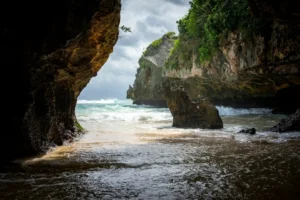
Padang Padang looks perfect in pictures, but real life is messier. Towels everywhere. Laughter. People stepping carefully over rocks. If you come early, though, before the crowd wakes up, it feels different.
I sat there once doing nothing. No phone. No book. Just watching waves roll in and break against the reef. This Uluwatu travel guide would be incomplete without saying this: the best moments here often look boring from the outside.
Bingin, Where Time Gets Soft
Bingin doesn’t rush you. It almost refuses to.
You walk down, step by step, and suddenly you’re in this small world of boards, cafés, and conversations that don’t go anywhere important. And that’s the point.
I ate the same meal twice in one day there. Not because I planned to. I just didn’t feel like leaving. That’s something this Uluwatu travel guide for cliff beaches won’t tell you directly, but you’ll feel it anyway.
Beaches You Don’t Remember the Name Of
Some beaches in Uluwatu don’t stick in your memory as names. They stay as feelings.
Sharp sun. Hot sand. Quiet water. A long walk where you barely see another person.
You won’t post photos of these places. Or maybe you will, but you won’t look at them much later. This Uluwatu travel guide values those unnamed moments more than landmarks.
Even If You Don’t Surf, You Learn From Surfers
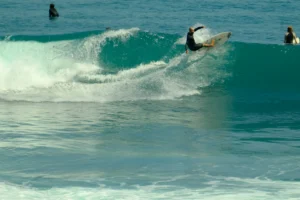
Surfers here have patience. Real patience. The kind that doesn’t fidget.
They sit, they wait, they watch. And when nothing happens, they keep waiting. That rhythm slowly rubs off on you.
One afternoon, I watched the ocean with a surfer who barely spoke. After a while, silence felt normal. This Uluwatu travel guide isn’t about learning to surf. It’s about learning to wait.
Respecting the Ocean (Seriously)
This part matters.
The water around Uluwatu can look calm when it isn’t. Reefs are sharp. Currents are real. Locals know this, and they don’t dramatize it.
An Uluwatu travel guide for cliff beaches should say this clearly: ask before swimming. Watch others. Don’t assume.
The ocean here isn’t dangerous because it’s angry. It’s dangerous because it doesn’t care.
Uluwatu Temple, Crowds and Calm Existing Together
Yes, it’s crowded. Yes, monkeys steal things. And yes, it’s still worth it.
Late afternoon is best. The light softens. The air cools. The cliff feels taller somehow. Standing there, you don’t feel like you’re above the ocean. You feel like you’re beside it.
This Uluwatu travel guide doesn’t tell you to stay long. It tells you to stay present.
Food That Doesn’t Compete for Attention
Food in Uluwatu doesn’t shout. It doesn’t need to.
Sometimes it’s a smoothie bowl that tastes better because you’re sunburned. And sometimes it’s grilled fish eaten too slowly. Sometimes it’s coffee you forgot to finish because the view distracted you.
This Uluwatu travel guide for cliff beaches quietly recommends eating near the sea. Your body understands why.
Where You Sleep Matters Less Than How You Wake Up
Luxury exists here, sure. But so do simple rooms with fans and open windows.
I once stayed somewhere where the mattress wasn’t great, but I woke up to wind and waves. I never complained.
This Uluwatu travel guide believes waking up matters more than where you sleep.
Moving Around Without Fighting the Place

Scooters give freedom, but only if you’re ready. Roads are narrow. Turns come fast. Google Maps sometimes lies.
Drivers here are patient. Use them. Bring cash. Drink water. Wear shoes that won’t betray you halfway down a cliff. An Uluwatu travel guide for cliff beaches is really just a guide to avoiding unnecessary stress.
Evenings Feel Earned
Sunsets in Uluwatu don’t perform. They just happen.
Some nights you’ll be surrounded by people. Some nights you’ll be alone. Both feel right.
One evening, I didn’t take a single photo. I forgot to. This Uluwatu travel guide counts that as success.
Small Moments You Don’t Realize You’ll Miss
There are details in Uluwatu that don’t register right away. The way dogs nap in the shade near cafés. The sound of bamboo chimes mixed with wind. The brief silence right after sunset, before night really settles in.
I noticed how often people smile here, not the polite kind, but the tired, sun-warmed kind. Conversations don’t feel urgent. Nobody seems impressed by anything, and somehow that makes everything feel more genuine.
On my last morning, I woke up earlier than usual. Not for sunrise, not for plans. I just listened. Waves in the distance. A scooter starting somewhere far away. Leaves moving above the roof.
That was it. Nothing dramatic. Nothing Instagram-worthy.
But later, back home, that quiet morning was the moment I remembered most. And I think that’s the point. Uluwatu doesn’t try to leave a mark. It just does.
Leaving Without Closure
Leaving Uluwatu feels unfinished. Like you paused a song instead of ending it.
You don’t feel like you “did” Uluwatu. You feel like you spent time with it.
That’s the quiet promise hidden inside this Uluwatu travel guide for cliff beaches. You’ll come back. Not because you planned to, but because something here stays open in your mind.
And maybe that’s enough.