
If you’ve been hanging around the usual Bali loop—beach clubs, crowded cafés, scooter traffic that feels like a video game—West Bali is… not a dramatic escape. That’s the point. It doesn’t do a grand entrance. It just quietly changes the temperature of your day.
The first time I went, I kept expecting a moment where I’d feel the shift instantly. Like I’d cross an invisible line and suddenly everything would look like a documentary. Instead, the change was slow. The road stretched longer. The noise thinned out. My brain stopped doing that thing where it tries to plan the next three hours while you’re still in the current one.
If you asked me for a West Bali travel guide, I’d probably tell you something slightly annoying: treat the west like a long exhale. If you arrive and immediately start hunting for a “wow” moment, you’ll miss the actual wow moment—which is your nervous system relaxing.
And yes, I’m aware that sounds like therapy-talk. I don’t mean it that way. I mean: you might sleep better without trying.
The Drive West Has Tiny Moments That Add Up
On Google Maps, it looks reasonable. In real life, it’s a drive with small interruptions—ceremonies, trucks, rain that comes in sideways, the occasional roadside stall that makes you suddenly crave something cold and sweet.
Sometimes you’ll pass through stretches where you can actually see the landscape instead of scanning for gaps in traffic. There are long views, bits of dry grass, patches of trees that look a little tougher than the lush south. It’s still Bali, but the vibe is different. Less polished. More… lived in.
If you’re coming from Java via the Gilimanuk ferry, the west feels like a working border. People moving with purpose. Vehicles lined up. A kind of practical energy that doesn’t care whether you’re on vacation. It’s not ugly, but it isn’t curated for you, either. I weirdly like that.
This is where a West Bali travel guide should say: don’t chain your schedule too tightly. The west is better when you’re not trying to force it into a neat plan. The more you insist on precision, the more you’ll feel frustrated by slow parts that aren’t “your fault” but still affect your day.
Also, bring snacks. I always forget this, then I become an unbearable person at hour four. So… learn from my weakness.
Picking A Base That Matches Your Energy
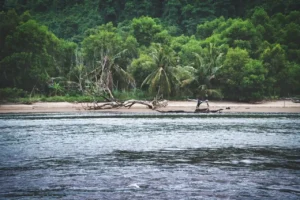
A lot of people settle in Pemuteran, and it makes sense. It’s calm, it’s coastal, and it’s close enough to park access points that you’re not doing a heroic commute at dawn—something often highlighted in any solid West Bali National Park travel guide.
But I think the real reason Pemuteran works is that it’s pleasant even when you do absolutely nothing. You can wake up, have breakfast, stare at the sea, pretend you’re the kind of person who meditates, then give up and just sit there anyway.
I stayed once a little outside the main area and the night was so dark it felt like the sky swallowed the road. I kept stepping carefully like I was sneaking around in my own vacation. Somewhere nearby, dogs were loudly discussing something urgent at 2 a.m. I didn’t love it in the moment. The next morning, I weirdly did.
If you prefer a more transit-friendly base, Gilimanuk can work, especially if your plan is simple: arrive, sleep, then explore. But if you want that slow seaside rhythm—and the kind of mornings most West Bali National Park travel guide articles quietly recommend—Pemuteran is usually easier.
If your friend texted you “where should I stay?” and you had to answer fast, this is the human version of a West Bali travel guide: choose the place that will feel good when plans change.
The Park Isn’t A Single Thing You “Do” In One Morning
West Bali National Park can confuse people because it doesn’t behave like a neat tourist attraction. It’s a protected region with land and sea. Different entry points. Different activities. Different speeds.
So I think of a West Bali National Park travel guide as a way to decide the shape of your day.
Do you want a boat day? Menjangan Island, snorkeling or diving, that deep-blue clarity people keep talking about. Or do you want a land day—forests, mangroves, dry open patches, wildlife if you’re lucky? Or do you want a split day, and accept that it might feel a bit rushed?
Also, the park has a “protected” atmosphere. It’s not just scenery. It has a sense of rules that exist for a reason. You’ll notice it in how guides speak, how people move, how nobody serious is acting like the park is their personal playground.
I don’t say that to scold. I say it because it changes the experience. You’re not consuming a place; you’re visiting it.
Menjangan Is The Kind Of Beauty That Makes People Shut Up
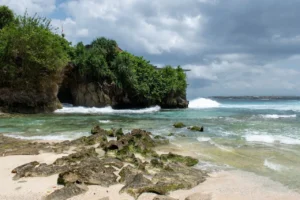
Menjangan is famous, sure. But it’s not the kind of famous that comes with chaos. The “wow” is quiet.
You get on a boat, ride out, and the coastline starts to feel farther away than it actually is. Then you slide into the water and your world becomes simpler—breath, float, look. Fish, coral, color. A weird calm that shows up even if you didn’t ask for it.
And then, because travel is never as smooth as the photos, something small happens. Someone’s mask leaks. Someone kicks too hard and drifts off. Someone realizes they forgot to put sunscreen on the back of their neck and spends the next two days touching it like it’s a personal betrayal.
A West Bali National Park travel guide matters here because Menjangan is not a random snorkeling beach. It’s part of a protected marine area. That protection is exactly why the underwater life can still feel rich. So the rules and permits and “please don’t touch things” reminders aren’t bureaucracy for fun—they’re part of the deal.
Also, bring a light layer for the boat ride. Not because it’s freezing, but because wind plus sun can make your skin feel tired in a way you won’t notice until later.
The Land Side Feels Like A Different Bali (And That’s A Compliment)
A lot of people do Menjangan and then skip land exploration. I get it. Water days are easy to love. But the land side is where West Bali starts to feel less like an “alternative itinerary” and more like its own place.
Some areas are drier. The light is sharper. The heat sits on you. It doesn’t give you the classic lush-jungle fantasy, and I think that surprises people. But I like that surprise. It makes the island feel bigger than the cliché version of itself.
On land, you notice small details that aren’t efficient to notice. A lizard frozen on a rock like it’s playing a game. Leaves making a dry sound in the wind. A moment where you stop walking and realize you’ve been staring at… nothing. Not bored. Just reset.
I’m repeating a thought here, but from another angle: West Bali rewards slowness. The sea gives you slowness like a lullaby. The land gives you slowness like a lesson.
If you’re following a West Bali National Park travel guide, think of it like balancing flavors—one day in the water, one day on land, and at least one day where you don’t force anything.
Evenings Are Simple, And Somehow That Becomes The Highlight
West Bali doesn’t hand you nightlife. It hands you quiet evenings and good sleep. If you’re used to places that constantly offer “something to do,” the simplicity can feel strange at first.
Then you adapt. You find a warung you like and you go back the next day. Same table if it’s open. Same dish if you’re honest. You tell yourself you’ll be more adventurous later. Later comes and you think, “Actually, I liked it.”
There’s something soothing about repeating a good meal. It makes the trip feel less like a performance and more like a small routine you get to borrow for a few days.
This is where I’d summarize a West Bali travel guide in one line: don’t demand constant stimulation from the west. Let it be quiet. Quiet is the feature.
Timing, Weather, And The Unsexy Truth About Flexibility

People want the perfect month, the perfect conditions, the perfect visibility. And yes, calmer seas help if Menjangan is a priority. Early mornings help if you’re walking on land.
But the real “secret” is planning with a little slack. A spare day. A slower morning. A backup plan that isn’t a plan, just permission to rest.
Here are the reminders I’d actually text you:
-
Start early on park days.
-
Drink more water than you think you need.
-
Use reef-safe sunscreen.
-
Leave one day loose, because your body might ask for it.
I know that sounds like common sense. But common sense disappears when you’re excited and trying to fit everything in.
Leaving West Bali Feels Normal, Then You Miss It Later
The funny thing about West Bali is that it doesn’t always hit you with immediate nostalgia. You might leave and think, “That was nice.” Then later, when you’re back in the noise, you’ll miss the space.
You’ll miss the emptier roads. You’ll miss the way the evenings felt slower. You’ll miss the quiet “wow” of Menjangan, or the dry heat of the land side that made you pay attention.
If someone asked you for advice after you went, you’d probably say something simple, like “It’s calmer.” And that would feel insufficient. But it wouldn’t be wrong.
That’s basically what a West Bali travel guide is trying to communicate, without sounding like a lifestyle ad. And if the person is specifically going for the park, the heart of a West Bali National Park travel guide is just: decide your kind of nature day, respect the place, and don’t rush it.