
There is a particular moment on a trip when you realize the clock has started behaving strangely. Sometimes it speeds up. You glance at your phone and it is already late afternoon, even though you swear you only just arrived. Other times it stretches. You sit somewhere ordinary, a curb near a bakery or the edge of a small plaza, and ten minutes becomes a soft little pocket that feels like an hour.
Most people assume that feeling comes from the destination itself. Paris does this. Kyoto does this. Somewhere tropical does this. But after enough trips, you start to notice a quieter factor: the rhythm you choose, and the rhythm that chooses you. Your travel pace is not only logistics. It is how you metabolize a place.
I used to plan trips like I was trying to win something. I am not proud of it, but it is true. If I had three days, I wanted three days to look full. Not full in a joyful way, more like “proof.” And yes, I collected beautiful moments. I also collected a fatigue that did not show up in photos.
Eventually I started asking a different question: what do I actually want to remember when I get home. Not what I want to have “done.” What I want to feel, later, when the trip is over and the ordinary week returns.
Why Speed Changes The Story Your Brain Keeps
Here is an odd thing about memory. When you move fast, you tend to remember the peaks. The cathedral, the viewpoint, the dramatic street at night, the one perfect meal. Those are bright and easy to retrieve. Your brain likes clear bookmarks.
When you move slower, the memories can be less obvious at first. They arrive later, sometimes weeks later, and they are not always impressive on paper. The sound of a train door closing. The way a city smells after rain. The small embarrassment of mispronouncing something, and then laughing with the person who corrected you. These details are not “highlights,” but they often carry the emotional truth of a trip.
This is one reason travel pace matters so much. A faster rhythm creates sharp snapshots. A slower rhythm creates a woven fabric. Neither is automatically better. But they produce different kinds of stories, and you may prefer one kind without realizing it.
And there is another layer. Speed affects decision making. If your day is packed, your choices become narrow: get there, queue, move, repeat. That can feel satisfying if you enjoy momentum. But it can also make you oddly brittle. One delay, one closed door, one wrong platform, and the whole day shakes.
A slower day gives you slack. It gives you room to be imperfect. Which sounds minor, yet it changes everything.
The Body Has A Vote, Even If You Ignore It
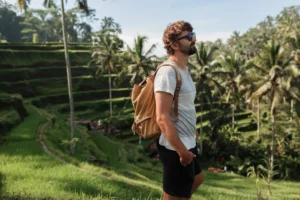
People talk about pace as if it is purely a personality trait. “I’m a fast traveler.” “I’m a slow traveler.” But your body has opinions, and your body gets a vote whether you ask for it or not.
Jet lag is a pace issue. Heat is a pace issue. Long stairs, hard shoes, a backpack that seemed “fine” at home and now feels like a stubborn animal clinging to your shoulders. These are not moral failures. They are physical realities.
I have learned, slowly, that pushing through can work for a day or two. After that, it starts to charge interest. You pay later, usually at the worst time. You snap at a friend. You stop enjoying meals. You start negotiating with yourself: “Just one more stop, then we rest.” And you keep saying it.
When you plan your travel pace, it helps to imagine day four. Not day one, day four. Day four is where the truth appears. That is the day your body stops being impressed by your ambition.
When Two People Travel Together, Rhythm Becomes A Relationship
If you have traveled with someone and felt tension that seemed silly, look at the rhythm mismatch. One person likes early starts and efficient routes. The other likes wandering and surprise. One person feels calm with a plan. The other feels calm when the plan stays loose.
This mismatch does not mean anyone is difficult. It means you are reading the same trip through different nervous systems.
A useful practice is to talk about rhythm in plain language before the trip begins. Not a detailed itinerary discussion. More like an agreement about the shape of a day. For example: we do one anchor activity, then we let the afternoon breathe. Or: we do two intense days, then one recovery day. That kind of simple framework prevents a lot of quiet resentment.
Even solo travel has this issue, just with yourself. You might feel guilty for resting, as if rest is a wasted opportunity. Or you might move too quickly because you are afraid of missing out, then wonder why you feel detached. I have done both. I still do both, occasionally. I notice it faster now, though, which helps.
Small Choices That Quietly Set The Speed
Pace is not only about how many cities you visit. It shows up in small decisions that repeat all day.
How early you start is one. Early mornings can be magical, but they can also become a habit that drains you. You can win the sunrise and lose the afternoon.
How you move between places is another. Walking slows you down in a good way. It shows you transitions, the in between streets where life actually happens. Taking rides everywhere can be efficient, but it can cut the city into disconnected fragments.
Meals matter more than people admit. If you eat on the run, you maintain momentum. If you sit for a long meal, you create an anchor. Long meals do something subtle: they stitch your day together, rather than letting it feel like a series of errands.
Hotel changes are a big one. Changing accommodation every night makes a trip look productive. In reality, it adds friction: packing, checking out, navigating, checking in, resetting. That friction steals attention. And attention is the whole point.
So when someone says, “I want a slower trip,” I often think the answer is not only fewer destinations. Sometimes it is fewer hotel moves, fewer timed tickets, fewer mornings that start like a race.
This is also where travel pace can be designed with buffers. A buffer is not empty time. It is time that saves the day when the day becomes real.
Destination Context: Some Places Want You To Linger

Certain places can handle speed. Tokyo is one. The infrastructure is smooth. The city is built for movement. You can hop neighborhoods, eat quickly, keep going, and still feel like the day makes sense.
Other places reveal themselves only when you stop trying to extract them. A small town in southern Spain. A coastal village in Portugal. A quieter part of Bali away from the busy roads. In these places, the “best moment” might not be a landmark at all. It might be the late afternoon when the street finally cools, and people start appearing outside, unhurried. If your schedule is tight, you will miss that without knowing you missed it.
Nature is its own category. A hiking day can be physically intense and still feel slow internally, because your attention is absorbed. You are not checking items off a list, you are staying with the landscape. That is a kind of slowness that involves movement, which confuses people at first.
So whenever you hear “three days is enough,” it is worth asking: enough for what kind of experience. Three packed days and three spacious days do not produce the same trip, even if the map looks identical.
A Practical Way To Test What Works For You
If you are unsure what rhythm suits you, you do not need a grand identity. You can experiment.
One approach is to alternate. Plan one day with structure: a museum ticket, a guided walk, a reservation. Then plan a day with a single intention and nothing else. Intention can be simple: explore one neighborhood, find a good coffee, sit somewhere and write. That contrast teaches you what your body and mind prefer.
Another approach is to create slow pockets inside a fast itinerary. Even if you are moving cities, choose one afternoon where you do not chase anything. You just exist in the place. It sounds almost too simple, but it changes the flavor of the whole trip.
And here is a slightly awkward truth: sometimes you arrive at a place you were excited about and you feel… nothing. Or you feel tired. Or you feel resistant. The old instinct is to force enjoyment. I try not to do that now. I pause and ask what I need. Food. Water. Quiet. A shower. Ten minutes sitting without deciding. Those are not romantic answers, but they are often the difference between a trip that feels lived and a trip that feels performed.
This is what choosing the right travel pace looks like in practice. Not perfect planning. More like responsive planning. You set a direction, then you adjust when the real day shows up.
Experience Ideas That Match Different Rhythms

If you know you enjoy momentum, choose experiences that are naturally contained. A street food tour. A museum with a clear route. A day trip with a defined start and finish. These compress value into a manageable shape, which is satisfying for fast days.
If you want a gentler rhythm, choose experiences that reward lingering. Markets in the morning. Cooking classes. Small galleries. Long dinners. River walks at dusk. Cafes where you are not trying to “make the most of it.” The point is to let the place get under your skin.
A surprisingly powerful trick is repetition. Return to the same cafe twice. Walk the same street at two different times of day. Sit in the same park again. The second visit shifts you from visitor mode into familiarity mode. You stop scanning for novelty and start noticing nuance. That is where a destination becomes a relationship instead of a checklist.
And yes, this circles back to travel pace again, because repetition requires time. It requires you to not fill every gap with a new attraction. That can feel scary. It can also feel, quietly, like relief.
A Soft Closing Thought Before You Plan Again
You will always miss something. Even on a long trip, even with perfect research, something remains unseen. That is not a failure, it is the nature of the world. The question is what you want to carry home.
Some trips are meant to be bright and busy. Some are meant to be slow and healing. Some need both, like a song that speeds up and then settles.
If you are planning your next journey, try asking yourself a simple question: on day five, how do I want to feel. Energized. Calm. Curious. Grounded. Then design your days so your rhythm supports that feeling.
If you do that, your travel pace stops being a background detail and becomes part of the craft. And the trip, even with mistakes and detours, starts to feel more like your own.