
Nature is having a strange moment, and I do not mean only the climate headlines.
I mean the way we visit it. We arrive, we point, we prove we were there, and we leave. Sometimes we call it a reset, but our bodies are still tense in the photos. Sometimes we call it healing, but we are checking the time every ten minutes because the itinerary is packed. I am not judging, by the way. I have done exactly this. More times than I want to admit.
There is a quieter version of travel that rarely goes viral. It is slower, a little messy, and honestly not efficient. It is the kind of trip where you might sit on a rock for twenty minutes and then realize you forgot to take a picture. Later you do not feel regret. You feel relief.
That is the shift I want to explore: nature as experience, not attraction.
Not because nature needs our respect in a ceremonial way, though it does deserve it. But because we keep trying to consume something that is not meant to be consumed. A forest is not a product. A coastline is not a stage. Even a famous mountain is not “for” us.
And when we remember that, nature travel experiences start to change shape. They stop being a hunt for a single moment and become a way of noticing, learning, and returning to ourselves without forcing it.
When A Place Refuses To Perform
There is a moment that happens to almost everyone, usually on day one of a trip. You arrive at a viewpoint you saved on your phone. You expect the famous scene. And then nature does not cooperate. Clouds roll in. Mist hides the valley. The sunset becomes a dull gray. Your brain feels cheated.
I used to feel that frustration. Now I try to treat it as information.
Because the attraction mindset trains us to believe the place owes us a payoff. It teaches us that the value of nature is visual and immediate, like a reward screen. But wild places are not built on our schedule. They are built on systems. Wind, tides, temperature shifts, animal routines, water stored in soil, water lost to heat, water returning in rain. The beauty is still there. It is just not packaging itself for us.
I once stood on a cliff for a long time when the view was basically nothing. A blank wall of fog. I should have left, I guess. But I stayed, partly because I had nowhere urgent to be, and partly because leaving felt like admitting failure.
After a while the cliff became interesting again. The fog moved like a slow creature. Birds appeared out of nowhere, then vanished. The sound changed when the wind shifted. I noticed my own impatience. That is not a grand revelation, but it was real. It was a reminder that nature is not an image. It is a living process that continues whether we are impressed or not.
This is where nature travel experiences begin, not at the perfect panorama, but at the point where the place refuses to perform and you decide to stay anyway.
Why Attractions Flatten Nature
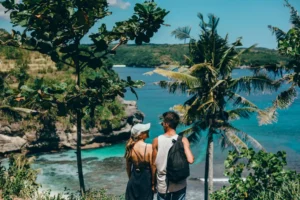
Attractions assume a center. They tell you where to stand, where to look, what to feel. Even when nobody says it out loud, the crowd does. Everyone lines up at the same spot, camera raised, waiting for the identical frame. It is strangely comforting, and also strangely dull.
When we treat nature as an attraction, we flatten it into a single angle. A waterfall becomes the water, not the river system that feeds it. A mountain becomes a summit photo, not geology, weather, and the long slow work of erosion. A jungle becomes “green,” not relationships between plants, fungi, insects, and the animals that depend on them.
There is also a practical cost. Concentrated foot traffic damages fragile ground. Wildlife changes behavior. Local communities absorb noise, waste, and inflated prices. And then, when the place loses the quiet magic people came for, the internet moves on to the next “hidden” location. The cycle is predictable, almost boring in its own way.
This does not mean you should avoid popular sites. Some places are famous because they are genuinely extraordinary. But if you visit them with the attraction mindset, you will often leave with a memory that feels thin. Like you touched the surface and did not get permission to go deeper.
If you want depth, you need a different approach. Not dramatic. Just different. The kind of approach that makes room for hesitation, small observations, and a little uncertainty.
The Practice Of Arriving Slowly
Here is something I recommend, and yes it sounds too simple.
When you arrive somewhere natural, do not move immediately. Stand still for two minutes. Look around without hunting for the best photo. Let your senses catch up.
What do you hear that is not human. What is the temperature doing on your skin. Is the air dry or damp. Can you smell salt, wet earth, leaves, smoke from distant cooking, or nothing at all. Where is the light coming from, and what does it do to texture, not just color.
This is a practical skill, not a spiritual performance. It makes you safer because you notice weather changes and trail conditions. It makes you more respectful because you notice wildlife, nests, and fragile ground and it also makes you more present in a way that does not require you to “be mindful” like a person trying very hard.
This is what I mean by experience nature thoughtfully.
After those two minutes, you can walk. But you will walk differently. Your attention will be wider. You might even choose a less popular path because you are no longer chasing the same frame as everyone else.
And something else happens, quietly. The place begins to feel less like a destination and more like a relationship. Relationships do not develop through speed. They develop through time and return.
Destinations That Reward Patience
Not all landscapes teach the same lesson.
Coastal wetlands, for example, are often dismissed as muddy and flat. But if you give them time, they become one of the best classrooms for ecological thinking. You see how roots hold shorelines together. You see how birds time their feeding with the tide and you see crabs, fish, and insects doing constant work in the shallows. Wetlands are not dramatic in the cinematic sense. They are dramatic in the systems sense, the kind of drama that keeps coastlines alive.
Cloud forests teach a different skill. They hide big views and offer intimacy instead. Moss, orchids, dripping leaves, the quiet weight of moisture in the air. You cannot rush a cloud forest without feeling like you missed something, because you did. It is like walking through a conversation where you only hear the last word of each sentence.
Deserts are misunderstood, too. People arrive expecting emptiness and leave quickly because “nothing is happening.” But deserts are full of strategies. Plants store water like savings. Animals move at dawn and dusk. Wind redraws the surface constantly. If you show up at the wrong time, you will think the desert is blank. If you show up with patience, you see a world built on timing.
Even a simple beach can change completely from morning to afternoon. The same sand feels different, the same water sounds different and the same sky has a different mood. Returning at another hour is one of the easiest ways to stop treating the place like a single experience.
And yes, I am going to say it plainly: some of the best nature travel experiences happen close to home. Not because local is automatically virtuous, but because repetition is possible. You can revisit. You can notice what changes across weeks, seasons, and weather. That kind of relationship is rare when you only chase faraway highlights.
How To Design Better Nature Travel Experiences
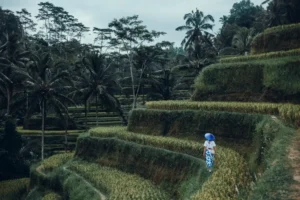
If you want nature to feel like experience rather than attraction, you do not need an extreme adventure. You need a different structure.
First, choose fewer locations. Spend longer in each. This is the part people resist because it feels wasteful. But the “waste” is the point. Attention needs space. If every hour is scheduled, your mind stays in task mode, even if the task is “relax.”
Second, plan around natural rhythms. Many animals are most active early in the morning and late in the afternoon. Light is softer. Temperatures are gentler. Crowds are thinner. If you want to hear a place, dawn is generous. And if you cannot wake early, that is fine. The principle still holds: align your visit with the ecosystem, not only with convenience.
Third, bring one learning lens. Just one. Birds, tides, geology, plants, stars. Pick the lens that makes you curious, not the one you think you should pick. A simple offline guide can be enough. Or a local guide who knows the place through years of living, not through a memorized script.
Fourth, include at least one activity where you do less. Sit near a tidepool. Take a slow canoe along a river. Walk a trail without headphones. Do not underestimate how powerful this is. Doing less makes you notice more. And noticing more is the whole point.
This is how nature travel experiences become personal, not because they are unique on the internet, but because your attention makes them yours.
Small Rules That Actually Matter
Leave no trace can become vague unless it becomes behavior. So here are practical rules that change outcomes.
Stay on established paths when the landscape is fragile. Alpine plants grow slowly. Sand dunes shift easily. Coral breaks easily and does not heal quickly. If you are unsure, watch the ground. Rock and durable surfaces tolerate footsteps better than living crust, soft plants, or sensitive shorelines.
Keep distance from wildlife. A calm animal is not always a comfortable animal. Stress can look like stillness. If you want a photo, use a zoom lens, or accept that the best photo is the one you do not take.
Be careful with sound. This one feels small, but it matters. Many creatures depend on hearing for survival. Loud voices, drones, constant music, they turn a living environment into a theme park. If you want to remember a place, remember its soundscape.
Support local knowledge without turning people into props. Hire local guides when navigation, safety, or cultural boundaries matter. Pay fair rates. Ask questions and listen. If a community says an area is restricted, treat that as clarity, not a challenge.
One more thing, and it is a personal observation. Watch your own pace. Sometimes we chase outdoor intensity because we are trying to outrun something internal. Nature can help, but it is not a vending machine for peace. The slower approach is often better because it does not force a feeling. It lets a feeling arrive on its own.
When you travel this way, nature travel experiences stop feeling like performances. They feel like nourishment.
Experience Recommendations That Feel Real
If I were planning a trip for a close friend, I would not start with the biggest sights. I would start with experiences that invite attention.
A guided walk focused on one theme, such as tracking animal signs, identifying plants ethically, or learning local geology. Not because you need to become an expert, but because the theme gives your mind a way to see.
A water based day that moves slowly. Kayaking through mangroves, drifting along a calm river, tidepool wandering with respect. Water makes us less certain, and that is useful. It forces observation.
A night with minimal light. Stargazing from a quiet hill can reset your sense of scale in a way no mountain selfie can. The point is not trivia. The point is remembering the sky is part of the environment, not a ceiling.
And yes, a return visit. Go back to the same trail on two different days. Notice what changes. Light, birds, insects, your mood, the level of human noise. Returning is one of the simplest ways to create deeper nature travel experiences, even if the place is not famous.
A Soft Next Step
If you are planning your next trip, try one experiment. Choose one place, only one, and decide in advance that you will stay longer than feels necessary. Give it three unhurried hours. Bring water, a snack, maybe a notebook. Allow a little boredom at the beginning. Boredom often shows up right before attention wakes up.
Then see what happens.
You might find that the place becomes more detailed. You might notice patterns you missed, you might feel quieter, not in a dramatic way, more like your shoulders drop without asking permission. Or maybe you just feel ordinary, and that is fine too. Ordinary can be a relief.
If you want, you can keep traveling the same way you do now and simply add this one habit: arrive slowly. Let the place exist before you try to capture it.
That one habit, repeated, is enough to turn a checklist into a relationship.
And when that happens, nature travel experiences stop being something you collect. They become something you carry.