
Traveling at Your Own Pace: Why Slower Experiences Feel Deeper
There’s a specific kind of tired you get from fast travel. It’s not the good tired, the “I walked all day and earned this sleep” kind. It’s something else entir...
There’s a specific kind of tired you get from fast travel. It’s not the good tired, the “I walked all day and earned this sleep” kind. It’s something else entirely. A managerial tired. Like your brain has been running a small company called Trip Logistics Inc. since breakfast, constantly scheduling, optimizing, recalculating—rarely allowing you the quiet luxury of traveling at your own pace.
I used to think that tiredness was normal. Proof, almost. If I wasn’t exhausted, maybe I wasn’t doing it right.
But the trips that stay with me—really stay—usually have a softer beginning. They have time to warm up. They include slow mornings, half-plans, and those unimportant seconds where nothing is happening and you realize you’re… fine. You’re just sitting there. Alive in a place you don’t fully know yet.
That’s the first door into traveling at your own pace. Not a philosophy you announce. More like a behavior you slip into. Quietly. A little suspicious of it at first.
Because we’ve been trained to treat travel like an achievement. The more you “cover,” the better you did. The more pins on the map, the more valid the trip feels.
And yet—this is the annoying part—depth rarely comes from coverage. It comes from contact. Repeated contact. The kind you can’t cram.
Why Speed Creates Bright Memories And Thin Stories
Fast itineraries produce bright flashes. The kind you can retell easily: “We went here, then here, then we did this.” It sounds impressive and it’s fun to say out loud.
But sometimes, months later, the stories feel oddly hollow. You remember what you did, not what it felt like to be there. The day becomes a sequence of proofs.
I think it’s because speed keeps you in constant novelty. Novelty is loud. Your mind has to keep adjusting: new streets, new cues, new rules you don’t know you don’t know. So you’re alert the whole time. Which can feel exciting—until it doesn’t.
Then there’s the decision-making layer. On fast trips, you’re always deciding. Where next? Which route? What time should we leave? Is this line worth it? Should we skip lunch? Should we push through?
Your attention gets spent on management.
And attention is the currency of depth. If you spend it all on logistics, there’s not much left for the place itself.
That’s why slower travel can feel almost… heavier. In a good way. Like a song with more bass. Less sparkle, more presence.
The Small Weird Things You Only Notice When You Stop Performing

Here’s something I didn’t expect: when you slow down, you start noticing things that don’t help you at all.
Like the way certain neighborhoods “wake up” at different speeds. Or how a city smells different at 6 a.m. versus 2 p.m. Not in a dramatic way. Just slightly. Damp concrete after rain. Frying oil. Detergent. Coffee that’s a little burnt because someone’s been making it the same way for decades and sees no reason to change.
You also notice how people occupy space. Where they stand. How they queue. How they don’t queue. The tiny social choreography that visitors usually miss because they’re busy searching for the next highlight.
Sometimes you catch yourself doing nothing. And your first reaction is guilt. Then the guilt fades. Then you look around and realize: this is part of it. This is actually part of why you traveled.
It’s not efficient. It’s not even “content.” But it’s real.
This is also where traveling at your own pace becomes less about time and more about permission. Permission to be ordinary in an extraordinary setting.
The Blank Afternoon, Or: The Part Where People Panic
There’s a particular fear that shows up around 1 or 2 p.m.
You’ve done your main activity. The morning was solid. You got the photo. You ate the thing. Now it’s hot, your feet are making complaints, and suddenly there’s no obvious next step.
This is when a lot of travelers open their phones like they’re pulling a fire alarm. “What else can we do nearby?” “Top 10 hidden gems.” “Must-see before you leave.”
I get it. Blank time can feel like failure.
But blank time is often where depth begins.
When you don’t fill every gap, you let the place offer you something smaller. Maybe you wander into a bookstore, maybe you sit near a harbor and watch people come and go with no story attached. Maybe you take a slow bus ride just because it’s there and you want to see what “normal” looks like outside the tourist radius.
And sometimes—this is important—you do something boring. You rest, you drink water, you stare at a wall for a minute. You scroll a little and you feel vaguely unproductive.
That boredom is not the enemy. It’s the transition from spectacle to familiarity. The nervous system settling down enough to actually receive the experience.
Repetition: The Thing Everyone Avoids, The Thing That Works

Most people hate repeating anything on a trip. It feels like wasting a limited chance.
But repetition is how a place stops being a stage set.
Go to the same café twice and you’ll notice the second visit feels different. You sit down faster and you stop scanning the room like you’re searching for evidence. You might recognize the staff’s routine: who wipes tables, who takes orders, who disappears into the back at the same time each day.
On the third visit, you might get a nod. Not a friendship. Not a miracle. Just a small recognition that changes the atmosphere.
And even if nobody recognizes you, you recognize the place. That’s enough. Your body relaxes. You stop bracing.
This is one reason traveling at your own pace can feel deeper even with fewer “big” activities. Familiarity creates a baseline. Once the baseline exists, you can notice nuance.
It’s almost unfair how effective it is.
Practical Gains That Don’t Sound Romantic (But Matter)
I’ll drop the required phrase once: slow travel experiences benefits.
The obvious one is cost. Constant movement is expensive—transport, short stays, and those “I’m too tired to research so I’ll just pay for convenience” decisions. Staying longer in one area reduces the confusion tax. You learn where to eat without overpaying. You find the grocery store and you stop buying water at the worst possible prices because you finally know where the normal places are.
But the bigger practical gain is energy.
When you stay put, you make fewer decisions per day. Fewer decisions means less mental friction. Less friction means you can be curious again, in a gentler way. You start taking detours because you want to, not because your itinerary says you should.
Also—maybe this is just me—my body behaves better on slower trips. I sleep better. I hydrate. I’m less irritable. That sounds like a low bar, but it matters. An exhausted traveler doesn’t absorb anything deeply. They survive it.
Destinations Where Slowness Feels Natural Instead Of Forced
Some places naturally reward staying longer. Not because they have “more to do,” but because their value is in rhythm.
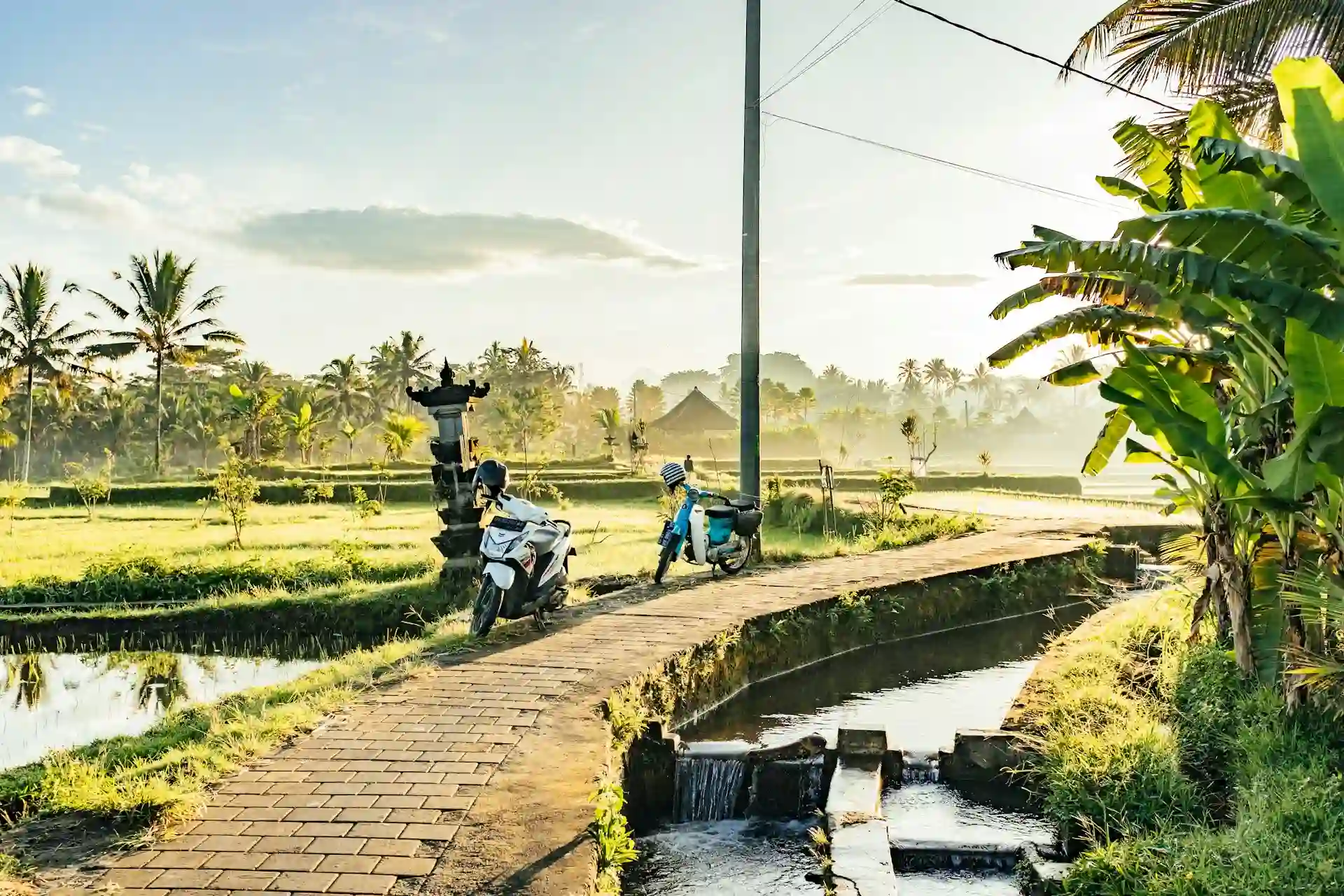
In Indonesia, Bali is a good example—especially if you avoid treating it like a checklist. Yes, there are famous spots. But the deeper experience often lives in timing: early morning offerings, late afternoon light, the way a street becomes calmer after day-trippers leave. If you stay in one area long enough to notice those cycles, the island feels less like a product and more like a living place.
Yogyakarta can work the same way. You can do the major temples, sure, but the texture comes from repetition—walking the same stretch of road at different hours, returning to a warung, slowly understanding what parts of the city feel artsy, student-heavy, quiet, loud. The second day can be better than the first. The fourth day can surprise you.
Small towns, islands, and nature destinations also tend to reward slowness because there’s less pressure to “complete” them. Mountains don’t care if you saw three viewpoints. Forests don’t reward speed. Coastlines don’t improve when you rush.
The place sets the pace. If you accept it, you stop fighting.
Ways To Slow Down Without Turning The Trip Into A “Project”

You don’t need a month-long stay to travel slowly. You just need a different daily structure.
Try one anchor per day. One. A museum, a neighborhood, a hike, a market. Then let the rest be flexible.
Flexibility doesn’t mean chaos. It just means you aren’t stacking the day so tightly that there’s no oxygen.
Another approach is to choose one neighborhood as a base. Even in a huge city, a stable base changes how you feel. You start knowing where things are. Your “home radius” becomes familiar. That familiarity is what creates depth.
And here’s a small thing that sounds silly: plan one deliberate repeat. The same market twice, the same café twice. The same walk twice. Different time of day. Different mood. Same route.
If you do that, the trip stops being a sequence and becomes a relationship.
Experience Ideas That Tend To Stick
If you want recommendations that lean naturally into depth, go for experiences that include waiting, watching, returning, or lingering.
-
Visit a market early, then return later and notice how it changes.
-
Take local transport for the journey itself, not just the destination.
-
Have one long meal in a simple place where you don’t rush and don’t “rate” everything in your head.
-
Do the same short walk in the morning and at night.
-
Sit somewhere public—park, pier, sidewalk café—and let the place pass in front of you.
These experiences don’t look impressive on paper. That’s why they work. They’re not performance-friendly. They’re memory-friendly.
A Soft Ending, Like I’m Talking To You Over Coffee
If you’re planning your next trip and you feel the urge to cram, you don’t have to abandon your style. Just loosen it a little. Leave one afternoon open and try not to “fix” it. Return to one place twice without apologizing to yourself.
Try traveling at your own pace as an experiment, not a moral stance.
Because the deepest travel moments rarely announce themselves. They show up quietly—when you’re not rushing, when you’re not collecting, when you’ve stopped trying to prove you were there.
And then, later, you realize: that was the real trip.
You may also be drawn to

Bali Travel Guide for First-Time Visitors
No one really prepares you for the moment Bali starts to feel familiar. It usually happens quietly. You’re not standing at a famous viewpoint or posing for a p...
Ubud Area Guide for First-Time Visitors
When you arrive in Ubud, there’s this tiny moment where you think, “Wait… did I come to the wrong place?”And honestly, this is where the Ubud area guide begins—...
Ready to Plan Your Journey?
Tell us how you envision your journey. We'll thoughtfully arrange the rest.
Speak With Our Travel Designer