
I never planned to learn about etiquette in Bali. Honestly, I thought I already knew enough. Smile, be polite, don’t be rude, that kind of thing. But Bali has a way of quietly teaching you things without ever saying a word.
The first lesson came early. I was walking down a small street, still half asleep, thinking about coffee. I didn’t notice what was on the ground. A woman nearby gently cleared her throat. She didn’t scold me, she didn’t raise her voice. She just looked at the small offering in front of my feet.
I stepped back immediately. Embarrassed. She smiled.
That was when I realized Bali doesn’t correct you loudly. It expects you to pay attention. That moment stayed with me, and it’s the reason I always tell friends to read a Bali etiquette guide before they come. Not to be perfect, but to be aware.
Bali Feels Relaxed, But It’s Not Careless
People often say Bali is “chill.” And yes, it is. But not in a careless way. It’s calm because things have their place. Traditions, rituals, daily routines. Everything flows together.
Balinese culture is built around balance. Between humans and nature. Between the physical world and the spiritual one. When visitors ignore that balance, it creates quiet discomfort. When they respect it, doors open without effort.
This is where Bali etiquette and dos and donts really matter. Not as rules, but as signals. They show whether you’re just passing through, or actually present.
Offerings Are Everywhere, Even When You’re Not Looking
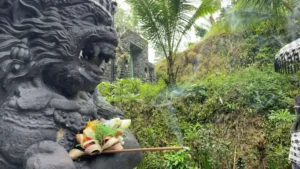
You will see small baskets with flowers and incense everywhere. On sidewalks. At doorways. In front of shops. Sometimes right in the middle of where you want to walk.
At first, it feels inconvenient. Later, it feels normal. Eventually, you start walking more slowly without thinking about it.
Don’t step on them. If you do by accident, stop. A small apology, even whispered, is enough.
No one expects tourists to know everything. But effort matters. Every Bali etiquette guide I’ve ever trusted starts with this simple awareness: look down once in a while.
Temples Are Alive, Not Attractions
Temples in Bali aren’t frozen in time. They’re used. Constantly. People pray, celebrate, mourn, and give thanks there.
Dress properly. Cover your shoulders. Cover your legs. Wear a sarong and sash. If you forget, most temples provide them. There’s no excuse to ignore this.
Speak softly. Move slowly. Don’t stand higher than priests. Don’t pose on shrines.
I’ve seen tourists treat temples like photo studios. It always feels uncomfortable. This is one of the clearest parts of Bali etiquette and dos and donts: if something feels sacred, treat it that way.
Talking to Locals Is About Tone, Not Words
You don’t need perfect English or Indonesian to communicate well in Bali. What matters more is tone.
People speak gently. Loud voices feel aggressive here. Public anger feels awkward.
Use your right hand when giving or receiving things. Or both hands. Avoid pointing with one finger. Use an open palm.
And never touch someone’s head. Even children.
These things aren’t written on signs. They’re learned by watching. That’s why a good Bali etiquette guide is less about instructions and more about observation.
Clothing Says More Than You Think

Bali fashion online looks wild. In real life, it’s more balanced.
At the beach, wear what you want. In villages, shops, and local areas, cover up a bit. Not because someone will yell at you, but because respect here is quiet.
Loose shirts. Light pants. Dresses that cover thighs. It’s not about rules, it’s about context.
Ignoring this is one of the most common mistakes mentioned in Bali etiquette and dos and donts, especially among long-term visitors who forget they’re still guests.
Food Is Not Just Fuel
Eating in Bali is social. Even at simple places.
If you’re invited into someone’s home, don’t rush. Try the food. Even a small bite is polite. Compliment it honestly.
Avoid wasting food. Take what you can finish.
Meals are moments of connection. A shared table often says more than a long conversation. This detail appears in every meaningful Bali etiquette guide for a reason.
When Bali Stops Your Schedule
At some point, your plans will be delayed by a ceremony. Roads close. Music plays. People walk slowly, carrying offerings.
Don’t honk, don’t complain loudly, don’t rush.
This isn’t poor planning. This is priority.
Understanding this is central to Bali etiquette and dos and donts. Bali doesn’t rush for tourists. Tourists adjust to Bali.
Public Affection and Personal Space
Holding hands is fine. Kissing passionately in public is not appreciated, especially outside tourist hubs.
Respect personal space. Avoid stepping over people sitting on the ground. Walk around instead.
Small gestures carry weight here. This sensitivity is what separates respectful visitors from careless ones, as any Bali etiquette guide will quietly tell you.
Photos Are Not Always Welcome
Before taking photos of people, pause. Especially during ceremonies.
Sometimes a smile and a gesture gets approval. Sometimes it doesn’t. Accept that.
Not every moment belongs on social media. Some belong only to the people living them. This awareness is often missing from Bali etiquette and dos and donts, but locals notice it immediately.
Nature Is Sacred, Not Decorative

Mountains are sacred. Rivers are sacred. Forests are sacred.
Don’t litter, don’t touch coral, don’t chase animals for photos.
Respecting nature is respecting belief. This idea sits at the heart of every thoughtful Bali etiquette guide.
You Will Make Mistakes, And That’s Okay
Everyone does. I did. Many times.
What matters is how you respond. Pause. Smile. Learn. Adjust.
Bali is forgiving, but it values intention. When locals see you trying, they meet you halfway.
That’s why Bali etiquette and dos and donts shouldn’t feel heavy. They’re not rules to fear. They’re habits to grow into.
What You Take Home With You
You won’t remember every rule. You won’t follow everything perfectly.
But you’ll remember how Bali made you slow down. Look down. Listen more. React less.
A good Bali etiquette guide doesn’t make your trip smaller. It makes it deeper.
And in the end, Bali etiquette and dos and donts are just reminders: you’re not just visiting a place. You’re stepping into someone else’s life. Treat it gently, and Bali gives back in ways no photo ever could.