
I still remember my first real night walking through the streets of Bali without any plan. No list of places. No recommendations saved on my phone. Just hunger, curiosity, and the sound of motorbikes passing by. Somewhere between the smell of grilled meat and fried garlic, I realized something important: the island speaks through its food, especially when it’s served on the side of the road. This is not a polished travel article. This is a story I’d tell a friend, slowly, over coffee. And yes, this is my version of a Bali street food guide for beginners, built from moments, not theories.
The First Feeling You Get When You Follow the Smell
Street food in Bali doesn’t announce itself loudly. It doesn’t need to. You notice it because your senses react before your brain does. A warm, smoky smell floats across the road. You slow down. You look. A small cart. A few plastic stools. Someone fanning charcoal with calm patience.
That’s how most journeys into Bali street food begin. Not with a destination, but with instinct.
At first, you might hesitate. This feels okay, right? It looks safe enough, but you still wonder whether the place is meant for tourists or for locals. Those questions are normal. Everyone has them in the beginning. The funny thing is, after a few nights, you stop asking. You start trusting your eyes, your nose, and the quiet confidence of vendors who have done this every evening for years.
Why the Streets Tell Better Stories Than Restaurants
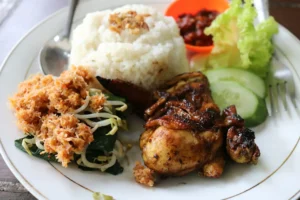
Restaurants in Bali can be beautiful. Some are unforgettable. But street food has something else. It has repetition. Routine. Life happening around it.
The woman selling rice dishes near her house is not performing. She’s feeding neighbors. The man grilling skewers might recognize faces he’s seen since childhood. This is why Bali street food feels alive. It doesn’t pause for you. You step into it.
When I explain this to friends, I usually say this: restaurants show you how Bali wants to be seen. Street food shows you how Bali actually lives.
Understanding the Rhythm of the Evening
If you show up at noon, you’ll miss it. The real energy starts late afternoon. Around five or six, the island shifts gears. Workers head home. Kids play outside. Carts roll out slowly, like they’ve done a thousand times before.
In every Bali street food guide for beginners, timing is quietly everything. Come too early and nothing is ready. Come too late and your favorite stall might already be sold out. That small window, just after sunset, is magic.
I’ve learned not to rush it. Walk. Stop. Observe. Let the street decide for you.
The Dishes You Didn’t Plan to Love
Some foods sound exciting when you read about them. Others surprise you when you’re standing there, hungry, watching them being cooked.
Sate lilit was one of those surprises for me. The smell of lemongrass burning slightly over charcoal. The sound of sizzling fat. The way the vendor turns each skewer with care. It doesn’t taste dramatic. It tastes balanced. Warm. Familiar.
Nasi jinggo is another quiet favorite. Small, wrapped in banana leaf, easy to eat while standing. It doesn’t try to impress. It just works. This kind of simplicity is what defines Bali street food for many locals.
Learning to Trust Simple Signs
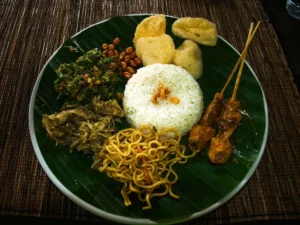
Beginners often ask how to “choose the right stall.” There’s no formula, but there are signs. Are people waiting? Is the food being cooked fresh? Does the vendor look relaxed but focused?
This is where a real Bali street food guide for beginners becomes less about rules and more about awareness. Locals don’t analyze too much. They feel the place. You can do the same.
I’ve eaten at stalls that looked almost temporary, like they could disappear tomorrow. And sometimes, they do. That’s part of the charm.
Drinks That Slow You Down
Not everything has to be spicy or heavy. Sometimes you just want something cold and simple. A plastic cup filled with ice and something sweet. Or fresh coconut water, handed to you with a straw and a smile.
Sitting down with a drink is often when you notice the details. The way people greet each other. The sound of plates clinking. The quiet comfort of routine. This pause is part of the Bali street food experience, even if no one tells you that directly.
About Cleanliness, Honestly
Let’s talk honestly. Yes, street food is not sterile. It’s human. But most vendors care deeply about what they serve. Their reputation matters, even if it’s only known within the neighborhood.
For beginners, common sense goes a long way. Eat where food moves quickly. Avoid stalls that feel abandoned. Watch how things are handled. A thoughtful Bali street food guide for beginners doesn’t scare you, it teaches you to observe.
I’ve eaten street food in Bali many times and never had a problem. Respect the place, and it usually respects you back.
Small Moments of Connection
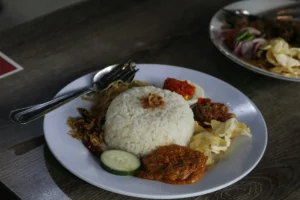
One night, I returned to the same stall three times in one week. By the third visit, the vendor didn’t ask what I wanted. He just nodded and started cooking. That moment meant more to me than any fancy dining experience.
This is the side of Bali street food people don’t talk about enough. The quiet relationships. The familiarity. The feeling that, for a moment, you belong.
Different Streets, Different Personalities
Denpasar feels different from Ubud. Sanur feels different from Kuta. The food reflects that. Some places are bolder, some are softer. Some are louder, both in flavor and atmosphere.
A good Bali street food guide for beginners doesn’t push one “best” area. It invites you to notice how each neighborhood expresses itself through food.
Eating Alone Is Not Strange Here
If you’re alone, don’t worry. Street food is perfect for solo eating. No pressure. No awkwardness. Just you, your food, and the street.
Some of my clearest travel memories happened while eating alone. Watching rain start suddenly. Hearing laughter from a nearby table. Finishing a meal without checking my phone. This is where Bali street food quietly becomes part of your personal story.
When Curiosity Replaces Fear
At some point, something changes. You stop hesitating, you stop translating everything in your head. You point, smile, and trust.
That’s usually when beginners no longer need a Bali street food guide for beginners. They’ve absorbed the rhythm. They’ve learned by doing.
Why This Experience Stays With You
Long after the trip ends, it’s often the small meals you remember. Not the planned ones. The unexpected ones. The night you were tired, hungry, and found something warm waiting for you on the corner of a street.
That’s the quiet power of Bali street food. It doesn’t shout. It stays.
A Final Thought, Shared Honestly
If this is your first time exploring, don’t try to be perfect. Don’t try to eat everything. Just start walking. Let your senses guide you. Let mistakes happen.
This Bali street food guide for beginners is not a checklist. It’s an invitation. And once you accept it, the island opens up in ways no guidebook ever could.