
I didn’t come to Bali looking for meaning. That sounds dramatic, but it’s true. I came because I needed distance from routine. From clocks that ruled my days. From deadlines that felt urgent but empty. On my first morning, I woke up before sunrise without setting an alarm. A rooster somewhere. A broom brushing concrete. The sound of water being poured. That quiet moment felt like an introduction to Balinese culture, even though nothing “special” was happening.
Bali doesn’t announce itself. It doesn’t introduce its values out loud. It lets you sit still long enough to notice them.
Sometimes that noticing happens when you’re doing nothing at all. Sitting on a step. Waiting for coffee. Watching light move across a wall. Those moments don’t feel productive, but they stay with you.
Time Feels Softer Here
Time behaves differently here. Appointments start later. Conversations stretch longer than expected. At first, I thought it was disorganization. Then I noticed something else.
People weren’t careless with time. They were intentional in a way I wasn’t used to.
Someone paused their work to place a small offering on the ground. Another person joined without being asked. No frustration. No rush. That was the moment I understood that Balinese culture doesn’t prioritize speed. It prioritizes presence.
You begin to realize that urgency is often learned. It’s not natural. Here, urgency dissolves easily.
Faith That Doesn’t Ask to Be Seen
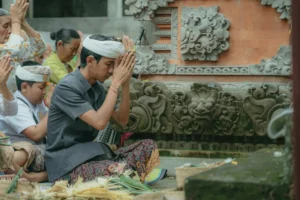
Religion in Bali doesn’t wait for you inside buildings. It meets you on the street.
Offerings sit on sidewalks, steps, and motorbikes. They’re small. Easy to miss. I almost stepped on one once. A woman noticed, gently moved it aside, and smiled at me as if she were the one who made a mistake. That interaction felt like another introduction to Balinese culture, one delivered without words or explanation.
No one corrected me. No one scolded me. The lesson arrived quietly.
That quietness matters.
Ceremonies That Rearrange the Day
Ceremonies don’t fit into spare time. Life rearranges itself around them.
Roads close without warning. Shops open late. Meetings are postponed. No one seems angry about it. When I asked why a place was closed, the answer was simple: “Ceremony.” That was it. In Balinese culture, spiritual obligations are not interruptions. They are priorities.
You stop seeing these moments as inconveniences. You start seeing them as signals. Something important is happening. You wait.
Community Is Work, Not a Concept
People love talking about community in Bali, but it isn’t abstract. It’s practical.
Villages operate through shared responsibility. Everyone has tasks. Preparing offerings. Cleaning temples. Organizing events. You don’t opt out easily. Sometimes people complain quietly. Sometimes they’re tired. But they show up anyway. That’s a side of Balinese culture tourists rarely notice.
It’s not romantic all the time. It’s simply expected.
Creativity Without the Need for Applause
Art in Bali doesn’t introduce itself as art.
Carved doors. Woven decorations. Temporary structures built for ceremonies and taken down days later. I once watched a man carving wood for hours. When I asked if he sold his work, he shrugged. “Sometimes.” No promotion. No explanation. That moment became a deeper introduction to Balinese culture than any formal exhibition.
Creation here feels quiet. Almost private. Even when it’s shared.
Dance That Carries Responsibility
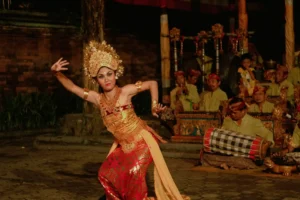
Balinese dance looks dramatic, but it’s not exaggerated.
Every movement is controlled. Every glance intentional. Watching children practice was the most surprising part. No laughing. No shortcuts. Corrections were gentle but precise. Dance here isn’t performance first. It’s duty. That seriousness runs quietly through Balinese culture, even in young bodies.
Mistakes aren’t punished. They’re corrected patiently.
Food as Shared Time
Meals are rarely rushed. Cooking often happens together.
Food appears without asking. Plates are refilled before they’re empty. I remember eating with a family where no one asked if I liked the food. They just kept serving me. That generosity wasn’t staged. It was instinct. Moments like that reveal Balinese culture in the most ordinary way.
You eat slower without realizing it.
Respect You Learn by Watching
No one explains respect to you. You learn by observing.
Voices soften around elders. Movements slow inside temples. Even disagreement sounds careful. This quiet social awareness teaches more than rules ever could. It becomes another unspoken introduction to Balinese culture that stays with you.
You adjust your behavior without being told to.
Nature Is Not Background
Mountains are sacred. Rivers are treated carefully. The sea is powerful and sometimes feared.
Nature isn’t scenery here. It’s involved. Rice fields are shared. Water is managed collectively. Cooperation matters. This relationship with the environment is central to Balinese culture, even if no one spells it out.
You begin to notice how often people acknowledge the land.
Modern Life Stands Beside Tradition
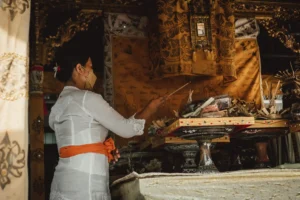
Phones are everywhere. Cafes are busy. Young people dress globally.
Still, offerings are placed every morning. Ceremonies continue. Modern life didn’t erase tradition. It learned to coexist with it. That balance feels fragile, but it works. It’s one of the most impressive parts of Balinese culture today.
Nothing feels forced. That’s the key.
Why Bali Is Difficult to Explain
People often say Bali has “good energy.” It sounds vague, but it makes sense after a while.
The feeling doesn’t come from one moment. It comes from many small ones. Often, it begins with a simple introduction to Balinese culture—a smile, a pause, an invitation to sit. Those moments accumulate quietly.
You remember them later, not immediately.
Learning Without Pressure
No one expects you to understand everything. Confusion is allowed.
You observe. You adjust. Over time, Balinese culture reveals itself without forcing anything.
That patience changes you.
What You Carry Home
You don’t leave Bali with answers. You leave with habits.
Waiting longer. Noticing small rituals. Understanding that urgency is often optional. That shift is the real gift of Balinese culture.
Small Moments You Remember Later
There are details you don’t think are important while you’re there. The sound of sandals on stone. Someone humming while tying bamboo. A pause before people enter a room. These things don’t register immediately. They feel ordinary.
But later, back home, those are the moments that return. Not the landmarks. Not the photos. It’s the way mornings felt unhurried. The way conversations didn’t rush toward conclusions. The way silence wasn’t uncomfortable.
Those memories surface quietly, usually when life starts feeling too fast again. And somehow, without trying, they remind you to slow down.
Bali doesn’t explain itself clearly or quickly.
It lets you feel first. Understanding comes later. And maybe that’s the most honest introduction to Balinese culture of all.