
Arriving in Sanur came without expectations.
There was no list to follow, no cafés bookmarked, no clear idea of how long the stay would last. What mattered was finding a quieter place—somewhere that didn’t demand too much, somewhere that allowed space to breathe. Only later did I realize that what I was slowly experiencing could be described, loosely, as a Sanur travel guide—not the kind you read, but the kind you feel your way through.
The first thing that stood out wasn’t the beach. It was the pace. Or rather, the lack of one.
Mornings That Don’t Push You
Sanur wakes up gently. The light comes in sideways. The sea stays calm, almost polite. People move, but without urgency. You hear doors opening, brooms sweeping, cups being set down on tables.
One morning, I sat with coffee that went cold because I forgot to drink it. I watched a fisherman prepare his boat. No one filmed him. No one applauded. He just worked. That moment alone explained why Sanur fits naturally into the idea of a Sanur travel guide for relaxed travel. Nothing here needs to perform.
A Town That Doesn’t Rearrange Itself for Tourists
Sanur doesn’t feel staged. Shops look like they’ve always been there. Trees feel older than the hotels beside them. Life continues whether visitors notice it or not.
You see school kids cycling past cafés. Locals chatting in the shade. Dogs sleeping wherever the ground feels cool. This isn’t a backdrop—it’s a place that exists on its own terms. That’s something worth mentioning early in any Sanur travel guide, because expectations matter here.
Where You Stay Is Just Where You Sleep

Accommodation in Sanur rarely tries to impress you aggressively. There are resorts by the water, yes, but they’re low and quiet. There are guesthouses tucked behind walls where mornings begin with simple greetings and familiar faces.
I stayed somewhere modest once. The room wasn’t memorable. But the way mornings felt was. I woke without alarms. I left without rushing. That ease is central to a Sanur travel guide for relaxed travel—comfort that doesn’t demand attention.
Walking Becomes a Habit
Sanur invites walking in a way few places do. Not fitness walking. Wandering walking. The beachfront path stretches long enough that distance stops mattering.
Some days I walked to get fruit and ended up watching the water instead. Other days I walked without knowing why. Time stretches here. It doesn’t disappear. That’s why rigid itineraries don’t belong in a Sanur travel guide like this one.
Eating Without a Clock
Food in Sanur doesn’t rush you. Tables aren’t turned quickly. Meals drift.
I once had lunch that quietly became afternoon coffee without anyone asking if I was “done.” The owner simply nodded when I stayed. That moment made more sense than any restaurant recommendation. A Sanur travel guide for relaxed travel isn’t about rankings. It’s about permission—to linger, to sit, to stay a little longer than planned.
Culture That Exists With or Without You
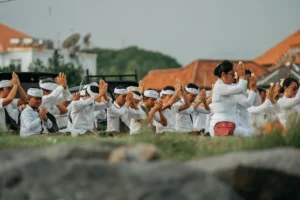
Sanur’s cultural life doesn’t announce itself. Offerings appear on sidewalks each morning. Small ceremonies happen without crowds.
I paused once to watch a ritual near a temple and felt unsure if I should be there. No one reacted. It wasn’t a performance. It was just life continuing. That’s not something you can schedule into a Sanur travel guide, but it’s something you’ll remember.
You Can Go Anywhere From Here—But You Might Not
Sanur is well-positioned. Boats to nearby islands leave from the harbor. Other parts of Bali are reachable without drama.
But after a few days, I stopped wanting to go anywhere. Plans felt unnecessary. Staying felt complete. That’s the quiet logic behind a Sanur travel guide for relaxed travel—choosing stillness without feeling like you’re missing out.
Evenings Fade Instead of Explode
When night comes, Sanur doesn’t change personality. Lights come on softly. Music appears without demanding attention. Conversations stay audible.
Some nights I sat by the water doing nothing. Other nights I talked longer than expected and left earlier than planned. There’s no pressure here. Rest isn’t something you earn. This Sanur travel guide understands that slowing down is the point, not the reward.
Who Sanur Speaks To
Sanur isn’t for everyone. It suits people who enjoy repetition. People who like mornings. People who don’t mind walking the same path twice and noticing something different the second time.
It doesn’t compete. It doesn’t convince. That’s why a Sanur travel guide for relaxed travel feels appropriate—it’s an invitation, not a promise.
Familiarity Comes Quietly
By the end of my stay, I stopped checking maps. Faces felt familiar. Streets felt known.
That sense of belonging doesn’t arrive with fireworks. It arrives unnoticed. And once it does, you understand why people return to Sanur again and again. That’s something this Sanur travel guide keeps circling back to, even without saying it directly.
Leaving Feels Light

Leaving Sanur doesn’t feel dramatic. It doesn’t feel unfinished either.
The packing happens slowly. Not carefully—slowly. The room gets checked twice, not out of fear of forgetting something, but because leaving the space doesn’t feel urgent. When the door finally closes, the moment feels ordinary. That ordinariness is unexpected.
Most places announce their ending. Sanur doesn’t. It simply lets the day continue without you.
Sometimes it feels like what stays behind isn’t the place itself, but the way life moved there. Efficiency fades. Plans loosen. Explanations stop being necessary. That shift follows quietly, long after leaving.
That’s why this Sanur travel guide for relaxed travel exists. Not to direct. Not to instruct. Just to suggest that slowing down doesn’t require effort here.
Small Changes That Stay With You
Something subtle becomes noticeable after a while.
The phone stays in a bag more often than usual. Not out of intention or discipline, but because there’s little need to document anything. Moments pass without asking to be saved, trusting memory instead.
Some afternoons feel almost blank. No highlight. No clear “best part.” Just heat settling in, a fan humming nearby, and the realization that nothing is required. At first, that lack of structure feels unfamiliar. Then it feels generous.
Meals slow down without decision. Walking slows without notice. It isn’t a rule or a practice. It’s adjustment. The place doesn’t demand change—it makes room for it.
On one of the final days, a longer route back seems appealing for no reason at all. Nothing new appears. The street looks the same. That sameness feels reassuring. Familiarity arrives quietly and feels more welcome than novelty.
Travel often asks for experiences to be collected. Sanur, without saying much, allows things to be set down instead.