
A lot of travel advice is shaped by a hidden competition. Not always loud, not always intentional, but it sits there. How many places, how fast, how “worth it” the itinerary looks when you share it.
Indonesia does not really cooperate with that mindset.
It is not that Indonesia punishes planners. It just refuses to be flattened into a list. A ferry will be late and nobody will act surprised. A mountain will hide behind cloud for hours, as if it has better things to do. A road will stop being a road and become a narrow lane where a ceremony is happening, and you will feel, for a moment, like the schedule in your pocket is slightly embarrassing.
When I think about the trips that stayed with me, they were not the trips where everything matched the plan. They were the trips where the plan softened. A long wait turned into a conversation. An awkward detour turned into a view I did not know to look for. I ate something I could not pronounce and decided it did not matter.
That is the shift I mean when I say an Indonesia travel journey is not a checklist. It is not an argument you win. It is something you enter.
And yes, I know how this sounds. Slow down. Be present. Everyone says that. But in Indonesia the why and the how are unusually concrete, because the country itself is built on rhythms that do not care about your efficiency.
Why Checklists Shrink A Country This Large
A checklist feels good because it makes travel measurable. You can count temples, beaches, islands, volcanoes. You can build a story that sounds clean.
But Indonesia is messy in the best way. Thousands of islands. Hundreds of languages. Layers of history stacked on top of each other, sometimes in the same street. Religious calendars. Agricultural seasons. Local customs that are not posted on a sign, they are carried in the body.
When you move too fast, you tend to interact with the thinnest layer of a place. Ticket windows, photo spots, car rides, hotel lobbies, the same “top ten” restaurant recommendations repeating like a song you did not choose. You can still have fun. But it is a flatter kind of fun.
There is also a quieter loss. Rushing keeps your mind in management mode. Your brain becomes a coordinator. It is busy negotiating transport, time, and logistics, so it cannot fully register the texture of daily life.
And daily life is where Indonesia becomes Indonesia.
The way people greet each other in the morning. The way a warung fills up around lunch time. And the way a neighborhood changes when a ceremony approaches. Even the way the air smells different after rain, which arrives with such confidence in some seasons that it feels less like weather and more like an announcement.
This is why an Indonesia travel journey is not just a poetic idea. It is a practical approach to getting more meaning out of the same number of days.
Choosing Fewer Places So You Can Actually Arrive

There is a fear most travelers do not admit out loud. If I choose fewer places, I will miss out.
The truth is that in Indonesia, trying to do too much often makes you miss out anyway. Not because you did not go, but because you did not arrive. You passed through. You collected the name and the photo, but the memory stays thin.
Indonesia takes time simply because of distance and water. A two hour travel plan can become a full day once you add traffic, waiting, weather, and the small realities of moving across islands. None of that is a disaster. It is normal. It is the country’s shape.
So the most effective decision is often the simplest one. Pick fewer bases. Stay longer. Let repetition do its work.
Bali is an obvious example, because people treat it like a single destination when it is really many moods. The south can feel busy and polished, built for convenience. Ubud has its own pulse, part spiritual, part creative, part tourism, and it is not always an easy mix. North Bali can feel calmer, less performative, more ordinary. East Bali can be quietly stunning, especially if you linger and stop chasing only famous photo points.
Java is different. Java is density, movement, and deep cultural roots. Yes, Borobudur is extraordinary. But it is only one chapter. Yogyakarta rewards a second day, even a third, because the city is not a museum. It is alive. You can feel tradition, art, student energy, and street food culture in the same afternoon. And train travel across Java is not dead time. It is a slow reveal of landscapes and small towns, the kind of view you do not have to earn by climbing anything.
If you want Komodo, or Flores, or Lombok, the same logic applies. Do not just “do” them. Stay long enough to have a morning that is not scheduled. Stay long enough to recognize the face of the person who makes your coffee.
I am repeating this idea from another angle because it is worth repeating. Fewer places gives you repetition. Repetition creates familiarity. Familiarity is where trust lives. And trust is where an Indonesia travel journey starts feeling personal, not borrowed.
Reading The Local Calendar You Cannot Google
Indonesia runs on calendars that visitors often miss.
There is the religious calendar. In Bali, ceremonies can reshape an entire neighborhood, not as a show, but as the center of community life. At Lombok, prayer rhythms shape the day in ways you feel even if you do not name them. In parts of Sulawesi, major rituals carry deep meaning and deserve quiet respect, not casual consumption.
There is also the agricultural calendar. Rice fields look different depending on season, neon green in one period, golden in another, muddy and preparing again later. Markets change with that seasonality. Fruit appears and disappears. Even what people talk about can shift, because daily life is tied to what is growing and what is being harvested.
Then there is the weather calendar, which is less predictable than people hope. Humidity can slow you down. Rain can arrive suddenly, not dramatic, just certain. The sea can look calm and then change mood.
How do you navigate this without becoming anxious?
You ask small questions. Quiet questions. The kind that show you are trying.
What is happening in the village this week
Is there a market day nearby
When is the best time to visit this place
Is there anything I should avoid doing today
That is what I mean by travel Indonesia thoughtfully. Not as a performance of being a good traveler, but as a practical habit. You are trying to move with the place rather than through it.
And sometimes you will still feel unsure. Good. That hesitation is useful. It keeps you respectful. It keeps you open.
Building A Day Around Anchors Instead Of Attractions
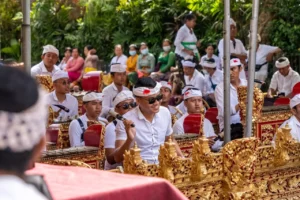
Checklist travel builds days around attractions. Journey travel builds days around anchors.
An anchor is a moment that holds the day in your memory without effort. It can be sensory, emotional, or social. Often it is small.
A taste can be an anchor. A bowl of soto when the air is damp. A plate of nasi campur that teaches you how many flavors can sit together without fighting. A simple grilled fish near the coast, eaten with your hands, and suddenly you understand why people eat slowly when the sea is right there.
A sound can be an anchor. Gamelan practice drifting from a community hall. The chatter in a morning market. The low hum of a ferry engine while people nap around you like it is the most normal thing in the world.
A tiny observation can be an anchor too. Seeing people sweep sidewalks before shops open. Watching drivers slow down near a village not because of signs, but because it is understood that children might cross. Noticing how often people share food, casually, without making it a big deal.
If you want a simple technique, try building a day around one question instead of five stops.
Where do locals go when they want quiet
What does this town feel like before it fully wakes up
What do people eat when they are busy and tired
What does the sea look like when the fishermen return
This works even in cities. Jakarta, for example, is often treated as a place to escape, but it can teach you a lot if you give it an honest day. History sits beside modern ambition. You might walk in Kota Tua, then sit in a cafe where young Indonesians work and talk about their futures. You will probably hit traffic, you might feel impatient. Then you notice how street vendors move with calm precision, as if chaos is just another kind of weather.
These are not efficient moments. They are the moments that make an Indonesia travel journey feel like it has a pulse.
Practical Ways To Slow Down Without Losing The Thread
Slowing down is not just a feeling. It is a set of decisions, especially when you have limited time.
Choose one home base per region
Stay put long enough that the neighborhood becomes familiar. Day trips are fine, but keep your bed in one place for a while. Your attention will change.
Arrive in daylight when you can
Night arrivals compress patience. Daylight arrivals make everything softer. You can find food, learn the area, and breathe.
Leave blank space on purpose
Not leftover time, real blank space. A slow morning. An unplanned afternoon. This is where you stumble into things that do not show up on lists.
Ask for one recommendation, then follow it well
Instead of collecting ten tips, take one and do it with attention. Ask why it matters, ask what to notice. People often respond warmly when you show you care.
Return to the same place twice
It sounds inefficient, which is why it works. Visit the same market on two different days. Watch the same beach in the morning and again near dusk. The second visit reveals what your mind skipped the first time.
None of this removes beauty from your trip. It changes the quality of beauty, it makes it sturdier, it makes it yours. That is how an Indonesia travel journey becomes something you trust, because you actually lived it.
Experience Recommendations That Become Stories Later
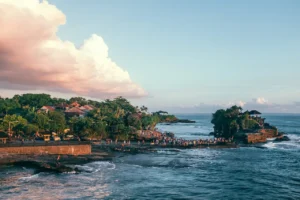
I am not going to hand you a perfect route. Indonesia is too personal for that. But I will offer experiences that reliably turn into stories, because they pull you into context.
Take a train across Java
It is transport, yes, but it is also a quiet education. Bring snacks. Sit by the window. Watch rice fields, towns, factories, mountains. Let the view arrive on its own schedule.
Visit a market before a cooking session
Markets show you daily life with no filters. You see what is seasonal, what is expensive, what people buy when they are busy. Cooking afterward becomes a bridge between travel and home.
Spend a morning at a harbor, not only on the water
If you love the sea, start where the sea meets work. Watch boats return. Ask about tides. Learn the names of fish. Notice how early the day begins for people whose livelihoods depend on weather.
Choose one community based activity with clear benefits
A craft workshop, a village walk, a local guide in a less visited area. Ask where the money goes. If the answer is clear, it is a good sign. If it is vague, choose something else.
Give yourself one day where the goal is to be a little bored
I mean this kindly. Boredom is where your attention stops grabbing and starts settling. You notice more, not because you try harder, but because you finally stop sprinting.
These experiences do not look impressive as a list. They feel impressive later. They become part of the way you remember Indonesia, not as highlights, but as a lived sequence. That is an Indonesia travel journey in its most honest form.
A Soft Ending That Keeps The Trip Alive
Near the end of travel, it is common to feel two things at once. Gratitude and restlessness. Part of you wants to stay. Part of you wants your own bed. I have learned to accept that mix. It usually means the place mattered.
On your last day, return to one spot you loved and do not chase new angles. Sit. Eat something simple. Watch people. Hold your phone less. Let the day be slightly ordinary. Ordinary is often what seals memory into place.
Then ask yourself one question, not as a motivational quote, but as a real inventory.
What did this place teach me about how I want to move through the world
Maybe it taught patience, maybe it taught humility. Maybe it reminded you that wonder is not rare, it is often just unattended.
If you carry that home, the trip does not end at departures. It continues as a quieter Indonesia travel journey, showing up in how you plan, how you listen, how you treat other people’s lives with care.
If kamu mau, kamu bisa tempelkan 1 sampai 2 paragraf yang paling “kena” di alat deteksinya, lalu aku revisi supaya lebih sesuai dengan suara brand atau suara pribadi kamu, fokus ke keterbacaan dan kealamian, tanpa mengejar angka alat tertentu.