
I didn’t plan much the day I went to Tanah Lot. That was probably the best decision. Some places don’t like being rushed, and this is one of them. You can feel it almost immediately, even before you see the temple itself.
If you’re looking for a strict itinerary, this won’t be that. Think of this as a slow conversation, the kind you have when someone asks about Bali and you don’t know where to start. This is my version of a Tanah Lot guide, mixed with small moments, pauses, and thoughts that didn’t feel important at the time but stayed anyway.
Where Tanah Lot Sits on the Island
Tanah Lot is on Bali’s southwest coast. Not far on paper, but distance in Bali is strange. Traffic stretches time. Sometimes the road feels endless, sometimes it doesn’t.
As you get closer, the air changes. It smells like salt and warm stone. Rice fields disappear. The ocean starts to show itself in small flashes between buildings. A simple Tanah Lot temple visitor guide should probably say this: arrive calm, or at least try to.
Walking In Without Knowing What to Expect

There’s a short walk from the parking area, lined with small stalls. I didn’t stop much. I just kept walking, listening to the sound of people and waves mixing together.
Then the space opens up.
And there it is.
The temple stands on its rock, not dramatic in a loud way, more like it’s confident you’ll notice eventually. People slow down without being told. Conversations fade. Cameras come up, then go down again. That first view explains why any Tanah Lot guide feels incomplete without emotion.
A Little History, Casually Remembered
Tanah Lot goes back to the 16th century and is linked to Dang Hyang Nirartha, a Hindu priest who traveled along Bali’s coast. He believed this rock in the sea was sacred.
There were disagreements back then. Stories of resistance. But over time, the temple stayed. And people kept coming. Locals still pray here today, which matters more than the date it was built. A respectful Tanah Lot temple visitor guide never forgets that this place is alive.
The Tide Changes the Mood
Here’s something you should know early: the tide decides a lot.
At low tide, you can walk closer to the temple base. Your shoes might get wet. The sand feels cold. The rocks aren’t smooth. You have to watch where you step.
At high tide, the sea surrounds the rock completely. You stay back and just look. The waves crash harder than you expect. Both moments feel right. A good Tanah Lot guide doesn’t choose between them.
I remember thinking I’d stay just a few minutes. That was the plan.
But time didn’t really behave the way I expected. I stood there longer than I realized. No photos for a while. Just watching the water hit the rock, then pull back again. Over and over.
It sounds simple. It was. But it stayed with me.
Sunset, Morning, or Somewhere in Between
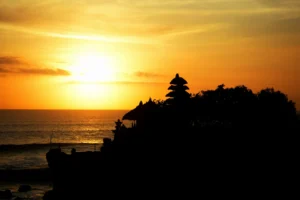
Most people come for sunset. And yes, it’s beautiful. The sky takes its time changing. Orange fades into something softer. The temple turns into a dark shape against the light.
But mornings are quieter. Fewer voices. You notice details instead of crowds. Offerings on the ground. The sound of water without music or chatter. Any honest Tanah Lot temple visitor guide would say there’s no perfect time, only different versions.
Dressing and Acting Like a Guest
Cover your shoulders. Cover your knees. Wear a sarong if you need one. Not because someone will shout at you, but because it’s the right thing to do.
If there’s a ceremony happening, don’t step into it. Just watch from a distance. Balinese rituals aren’t performances. A thoughtful Tanah Lot guide understands that without needing reminders.
The Small Cave and the Fresh Water
Near the base of the rock, there’s a small cave where fresh water flows out toward the sea. People line up quietly. Someone pours water over your hands or face. A flower behind the ear.
It’s simple.
Very simple.
And somehow meaningful.
There’s also the story about sea snakes guarding the temple. I didn’t see any. Still, the story stays with you. Every Tanah Lot temple visitor guide includes it for a reason.
Sitting Down Changes Everything
At some point, you’ll want to sit. Do it.
There are cafés facing the ocean where time feels less strict. Order a drink. Watch waves hit the rock again and again. No two waves look the same.
I didn’t realize how long I’d been sitting there until the light started changing.
That pause is part of the visit. A relaxed Tanah Lot guide leaves room for doing nothing.
It was quiet.
Really quiet.
Not silent, but close.
Photos, But Not Too Many
You’ll take photos. Everyone does. Just don’t let it take over. The best moments usually happen when your phone is down.
Some things feel memorable and fade fast. Other things feel small and stay. A sincere Tanah Lot temple visitor guide knows the difference isn’t always clear.
Going With Family or Older Travelers
The paths are mostly easy, but near the shore it can get uneven. Wear comfortable shoes. Take breaks. Sit when you need to.
Kids love the open space and water, but keep them close. The ocean here is calm until it isn’t. A practical Tanah Lot guide pays attention without making a big deal out of it.
How Long Is Enough?

Some people stay an hour. Others stay until the sky is dark. I don’t think there’s a correct answer.
Stay until you feel done.
That’s it.
A gentle Tanah Lot temple visitor guide would never argue with that.
Pairing Tanah Lot With the Rest of the Day
Tanah Lot works well as part of a slow afternoon. Maybe a quiet beach afterward. Maybe nothing planned at all.
It doesn’t like being squeezed between too many stops. Few places do. Any realistic Tanah Lot guide would suggest leaving space around it.
Final Thoughts, Without Trying Too Hard
Tanah Lot doesn’t demand attention. It just exists. Waves come in. Waves go out. The temple stays.
Long after Bali, you might forget details. But you’ll probably remember standing there, feeling time stretch a little. That’s why people keep searching for a Tanah Lot guide, and why every Tanah Lot temple visitor guide eventually runs out of words.
Some places are better felt than explained.
Tanah Lot is one of them.