
I used to believe I could travel respectfully just by being polite and smiling a lot. It sounded logical in my head: do not be rude, do not be loud, say thank you, tip when appropriate. Then I arrived in a place I had dreamed about for years and made a mistake within an hour. Not a dramatic one. Just the kind that leaves a faint sting afterward, the kind you replay later while brushing your teeth, thinking, why did I do that.
The Moment You Realize You Are Not Neutral
Travel changes the room the second you walk into it.
You might be carrying money that stretches further than it does at home. You might have a passport that opens doors quickly. You might speak a global language, or you might not, which is its own kind of vulnerability. Either way, you are not neutral. You are a guest with impact, and impact shows up in small places.
It shows up when a waiter switches languages mid sentence to accommodate you. It shows up when a shopkeeper repeats prices patiently for the sixth visitor that morning. It shows up when a quiet alley suddenly becomes a photo backdrop.
I do not say this to make travel sound heavy. I actually love travel. But loving something does not mean you should treat it like a vending machine. I learned that the hard way, in little pieces.
Sometimes I catch myself thinking, I paid for this trip, I deserve to enjoy it. And then I remember, other people are not part of my purchase. Their streets, their sacred places, their normal Tuesday afternoon are not included in my booking confirmation.
Research That Makes You Behave Differently

There is a type of preparation that looks impressive but does not change your behavior. You read ten articles, save fifty pins, memorize a list of “dos and donts,” and then forget half of it the moment you are hungry.
The research that actually helps is smaller and deeper.
Instead of collecting rules, try understanding the logic behind them. If a place is strict about footwear indoors, what does that say about cleanliness and respect. If modest clothing is expected in religious areas, what values are being protected. If public noise is frowned upon, what does that say about shared space.
When you understand the “why,” you can improvise better. You do not need a perfect script.
I also like to learn about social texture. Not the big dramatic culture facts, but the everyday ones. Do people greet strangers. Do they stand close when they talk. Is it normal to chat with a cashier. Is eye contact considered confident or pushy. What does “on time” mean there.
A friend once told me, “Learn how people apologize.” That sounded oddly specific. Then I started noticing it. In some places, apology is direct and quick. In others, it is softened with extra context or humor, or it is done indirectly by fixing the situation without words. If you know what apology looks like locally, you can repair mistakes more gracefully.
This is part of cultural awareness in travel, not as a fancy concept, but as a practical tool that helps you move through a place with fewer sharp edges.
The First Day Rule: Move Slower Than You Want To
The first day is when people do the most accidental damage. You are tired, excited, overstimulated. Your brain is busy translating everything: currency, signs, accents, traffic patterns. And when your brain is busy, your manners get sloppy.
So I started doing something that feels almost too simple to matter. On the first day, I schedule one hour where I do not chase anything. No landmarks, no “must do,” no rushing.
I sit somewhere ordinary and watch. A small cafe. A park bench. A corner near a supermarket where people are just living.
How loud is “normal” here. Do people wait quietly in line, or do they bunch up. Do they take phone calls on public transport. Do they smile at strangers, or keep neutral faces. How do they step around each other on narrow sidewalks.
This sounds inefficient, I know. But the payoff is real. You start catching the rhythm. And once you catch it, you stop barging into the space like it is yours.
That slow hour has saved me from mistakes I would have made while sprinting around with my camera already out.
Sacred Spaces Are Not Photo Sets
This part is awkward because I love beautiful places. I love architecture. I love light filtering through old windows. But sacred spaces are not designed for my awe.
Temples, mosques, churches, shrines, memorials, cemeteries. Even a river or a mountain can be sacred, in ways you will not understand on day one. The mistake is assuming you do not need to understand to behave properly.
Clothing is the obvious piece. Covered shoulders, covered legs, head coverings in certain contexts. The practical advice is easy. The harder part is energy.
Lower your voice before you are told. Step aside if someone is praying. Do not block doorways. Do not treat people performing a ritual like performers.
Photography is where the line gets crossed most often. It is not that photos are always forbidden. It is that the act of photographing changes the space. It can turn someone’s private moment into your souvenir.
When I am unsure, I do three things. I look for signs. I watch locals. I ask staff, briefly, without making it a drama.
And when it comes to photographing people, I ask. If I cannot ask, I do not take it. If someone says no, I accept it cleanly. No bargaining. No “just one.” No sad face. I try to remember that consent is not a formality, it is the point.
If you are trying to travel respectfully, this is one of the clearest tests, because the temptation is strong and the social cost of getting it wrong is real.
Money, Bargaining, And The Quiet Dignity Of The Interaction

Money can turn travel into a weird performance. Especially in places where bargaining is common.
Here is the truth: bargaining is not automatically disrespectful. In many markets it is normal, even expected. The disrespect comes from tone, from pushing too hard, from treating a person like a puzzle you want to solve, from turning “cheap” into a personal victory.
I used to feel proud when I got a low price. Now I feel uneasy if that pride comes with a story that makes the seller look foolish. That is not a good sign.
A healthier way to negotiate is simple. Smile. Offer a reasonable number. Let the seller respond. If they counter, counter back if you want. If you reach their limit and it still does not work for you, walk away politely. No dramatic reactions. No lectures about tourist prices. Just kindness.
Also, learn the tipping norms before you arrive. It reduces awkwardness in the moment and prevents accidental insult. In some places tipping is essential income. In others it is uncommon or only expected in specific contexts. Guessing while someone waits can make you act strange, and people can feel that.
If you can, support businesses that keep value local. Locally owned guesthouses, local guides with good reputations, craft cooperatives where makers are paid fairly. Not because you need to be a saint, but because it is one of the few levers you actually control.
Travel respectfully.
Language As A Small Sign Of Respect
You do not need fluency to make a difference. You need effort.
Learn hello, please, thank you, excuse me, sorry, how much, and a polite way to ask for help. Practice the pronunciation enough that you are not mumbling.
I have noticed something funny. When you try the language, people often soften. Not always, but often. They correct you, they laugh kindly, they help you. And being corrected is not humiliation. It is inclusion.
I still mispronounce things. Sometimes badly. But the attempt signals that you do not expect the world to meet you entirely on your terms.
This is another place where travel respectfully is not about perfection, it is about posture. Your posture toward the people around you.
Choosing Experiences That Do Not Use People
Some travel experiences look exciting on paper and feel wrong in real life.
Anything involving animals deserves extra caution. Anything involving children, especially. Anything that sells poverty as a spectacle, too. If an experience depends on someone else’s distress, it is not ethical entertainment, even if a hundred reviews call it “life changing.”
Ask questions that are not romantic. Who runs this. Where does the money go. What protections exist. Would locals recommend it. Is the experience built for visitors only, or does it genuinely benefit the community.
Then look for experiences where locals are clearly the experts. A walking tour led by a historian. A cooking class where you learn why a dish matters, not just how to copy it. A craft workshop where the maker explains tools, tradition, and time, and you pay fairly for that time.
Sometimes the best experiences are the quiet ones. A neighborhood market in the morning. A small museum with almost nobody inside. A bus ride where you watch the city breathe. A long meal where you stop checking your phone every two minutes. Those moments rarely go viral, and that is exactly why they feel real.
Travel respectfully.
What To Do When You Mess Up
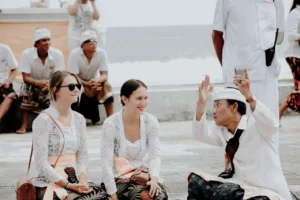
You will mess up. I do. Everyone does.
The key is how you respond.
Do not turn your apology into a performance that forces the other person to comfort you. Keep it short. “I am sorry. I did not realize. Thank you for telling me.” Then correct the behavior.
Afterward, privately, think about what happened. Were you rushing. Were you trying to capture content. Were you assuming your normal rules applied everywhere.
Most of my mistakes come from speed. Not from bad intentions. Speed. The urge to do more, see more, collect more.
When I slow down, my judgment gets better. I notice signs I would have missed. I hear the tone in someone’s voice. I realize I am standing in the wrong place. I move.
Travel respectfully.
Bringing The Lesson Home Without Turning People Into Stories
Respect continues after you leave.
It shows up in how you talk about a place. Try not to reduce an entire country to one personality trait. Try not to rank cultures like a contest. If you tell a funny story, make sure the joke is on your own ignorance, not on the locals.
And if you are planning a trip soon, here is a small practice that helps. Pick one local norm to focus on each day. Maybe volume. Maybe greetings. Maybe how people queue. Maybe clothing in religious areas. Observe it, adjust, and let yourself be slightly uncomfortable while you learn.
That discomfort is not failure. It is attention.
If you want to travel respectfully, the soft goal is not “never make mistakes.” The goal is “make fewer, repair faster, learn deeper.” And, weirdly, that makes travel more joyful. Not because you are performing goodness, but because you are actually connecting.