
I’ll be honest with you.
The first time I went to Ubud, I didn’t fall in love right away.
There was no dramatic moment. No instant connection. I remember thinking, Is this it? But the strange thing is, the longer I stayed, the harder it became to leave. That’s why this Ubud travel guide feels less like advice and more like something I’d tell a friend after sitting with the experience for a while.
Ubud isn’t loud. It doesn’t chase your attention. It waits. And if you’re patient enough, it slowly lets you in.
Getting There Already Changes Your Mood
You don’t arrive in Ubud suddenly.
You drift into it.
The road passes villages where people live right beside the traffic. Kids walk home from school. Someone is fixing a motorbike. Someone else is just sitting, watching the day pass. At some point, without realizing when, your shoulders relax.
I always say an Ubud travel guide should start before the destination. Because by the time you reach town, you’re already moving differently. You speak a little softer, you look around more. You stop rushing through moments that don’t ask to be rushed.
Culture Isn’t Scheduled Here
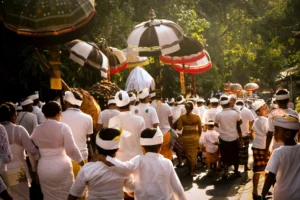
One thing that throws people off is how little Ubud explains itself. Ceremonies don’t come with signs. Processions don’t wait for permission. If the road is blocked, you wait. That’s it.
This is why Ubud feels like an Ubud travel guide for culture lovers, not culture consumers. You don’t get a front-row seat. You stand wherever there’s space and accept it.
I once followed music by accident and ended up sitting near a temple wall for almost an hour. No performance. Just practice. No one acknowledged me, and somehow that made it better. I wasn’t a guest. I was just there.
Walking Without Direction Works Best
Forget maps for a while.
Just walk.
Paths curve unexpectedly. Alleys get narrow. You’ll pass homes with open gates and small shrines that look used, not decorative. Someone is carving wood. Someone else is painting quietly.
Art in Ubud doesn’t announce itself. It exists. That’s why any real Ubud travel guide will tell you to slow down and stop trying to “see everything.” Some of the most meaningful moments happen when nothing special is supposed to happen at all.
Food Is Rarely Just Food
Meals in Ubud don’t feel rushed. Even simple food comes with a pause.
Sometimes the person serving you explains nothing. Sometimes they tell you too much. Either way, eating here feels personal. Like you’re being trusted to sit with the moment instead of consuming it quickly.
That’s why food fits naturally into an Ubud travel guide for culture lovers. It’s another form of storytelling, just without words. You taste patience, you taste repetition, you taste familiarity.
The Rice Fields Are Working Landscapes
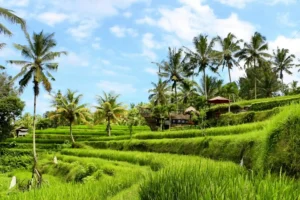
Yes, the rice terraces are beautiful.
But what matters more is that they’re alive.
Water flows through channels built long before anyone thought of taking photos. Farmers move early, quietly. The fields aren’t scenery. They’re systems.
This relationship between people and land is central to understanding Ubud, and any Ubud travel guide for culture lovers that skips this misses the point. Nature here isn’t admired from a distance. It’s worked with, respected, and depended on.
Spiritual Life Is Ordinary Here
Spirituality in Ubud doesn’t feel dramatic. It feels routine.
Offerings appear every morning. Shrines are cleaned. Incense burns and disappears. No one stops to watch unless they have time. Faith isn’t announced. It’s practiced.
At first, you might feel unsure where you fit. Eventually, you stop worrying about that. Many travelers say this Ubud travel guide helped them realize that belief here isn’t explained. It’s lived.
Markets Are About People, Not Bargains
Ubud’s markets can be noisy and crowded, but if you look closely, they’re built on repetition. Same faces, same routines, same jokes exchanged daily.
If you take your time, conversations happen. Not scripted ones. Real ones. This is where the idea of an Ubud travel guide for culture lovers makes the most sense. You’re not collecting things. You’re noticing patterns, rhythms, and familiarity.
Time Behaves Strangely in Ubud
There’s a different relationship with time here.
Not slow. Just flexible.
I once waited out heavy rain sitting on a step outside a shop. No one complained. Someone laughed. The rain stopped. Life continued. No one acted like time had been wasted.
Moments like that quietly change how urgency feels, and once that shift happens, it’s hard to reverse. You stop measuring days so tightly.
Community Is Quiet but Constant
People help without making a show of it. Neighbors appear when needed. Gatherings happen without calendars or reminders.
Visitors often come looking for inspiration and leave with reassurance instead. That connection doesn’t need to be designed or branded. It already exists.
Mornings Tell You Everything
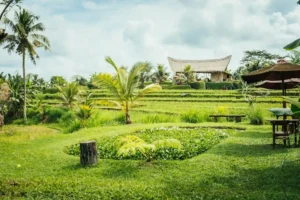
Early mornings in Ubud are gentle.
Cool air. Soft light. Sweeping sounds.
Locals clean their spaces every day, not because someone is watching, but because it’s part of life. After a few mornings, you start expecting the calm. You begin to miss it when it’s gone.
Hospitality Without Performance
Where you stay matters less than how you’re treated.
Guesthouses feel lived-in. Advice comes casually. Someone tells you which road floods when it rains. Someone reminds you to eat before a ceremony blocks traffic. You’re not managed. You’re welcomed.
Contradictions Live Side by Side
Ubud doesn’t try to resolve its contrasts. Tradition and modern life exist together. A café sits near a temple. A ceremony pauses traffic beside daily routines.
Instead of feeling messy, it feels honest. Nothing is hidden. Nothing is exaggerated.
Evenings Arrive Gently
Nights don’t explode here.
They settle.
Music echoes from temple courtyards. Dancers move slowly. The audience stays quiet. These moments reward patience, not excitement.
That’s when an Ubud travel guide finally makes sense—not as instructions, but as permission to slow down.
Leaving Feels Like Pausing a Conversation
You don’t leave Ubud feeling finished. You leave mid-thought.
Fewer photos. More memory. That’s what stays. And for those who value depth over spectacle, this Ubud travel guide for culture lovers offers something rare: a place that doesn’t ask for your attention, but keeps it anyway.