
I used to come home from trips with the same kind of souvenir every time: a neat little folder of proof. Photos. Receipts. A list of places I could name if someone asked, So what did you do there, as if culture in travel could be reduced to something I could file and show.
And then, honestly, the memories would flatten. Not immediately, but quickly. A skyline would turn into a thumbnail. A meal would become a caption. Even the moments I loved most would start to look like something I borrowed from other people’s images.
Now and then, though, a trip would land differently. I would come back and find myself thinking about a place while doing something boring like waiting for coffee or folding laundry. Not the famous parts. The small parts. A gentle correction from a stranger. The way people paused before answering a question. A habit of sharing food without talking about it like it was generosity. It just was.
Those trips were rarely about doing more. They were about noticing more. And once I paid attention to that, I started seeing the hidden engine in well designed journeys: culture in travel as a living context, not a theme.
Not culture as a museum checklist. Culture as the everyday logic of a place. The reasons behind the rhythm.
If you have ever felt that tiny jolt of confusion abroad, the one that makes you think, Wait, why is everyone doing it like this, you already know what I mean.
The Quiet Rules You Step Into Without Permission
A destination has laws, and then it has rules that are not written down. The ones you learn by accident.
Like how close people stand when they talk. Or how long they hold eye contact. Or what they consider “on time.” Or whether silence feels awkward, respectful, or simply normal.
You can ignore those rules, technically. Nobody arrests you for misunderstanding. But you will feel it. The subtle friction. The sudden coolness in someone’s face. The feeling of being slightly out of tune.
Thoughtful design does not remove that friction completely. That would be unrealistic, and maybe even sad. A bit of disorientation is part of travel. It is the body learning a new environment.
What thoughtful design can do is translate the quiet rules so you can participate instead of only observing. It can help you understand, for example, that a slow service is not laziness but a different relationship with time. Or that a refusal wrapped in politeness is not dishonesty but a way to protect dignity.
This is where culture in travel becomes practical. It stops being an abstract idea and starts shaping your decisions. When to speak. When to wait. When to soften your tone. When to ask a question gently because directness lands differently here.
I know that can sound like you are being asked to act. But it is not acting. It is tuning.
Why It Matters Even If You Just Want A Beautiful Vacation

Let me admit something. I like comfort. I like a good bed. I like a calm morning and an unhurried breakfast. I am not trying to suffer for authenticity.
And still, even a relaxed vacation becomes richer when you understand the place you are in. Without that understanding, you might relax in a way that makes you tense.
You might feel irritated when shops close mid afternoon. You might resent the length of a meal. You might mistake formality for coldness. Or mistake warmth for an invitation to cross boundaries.
The strange thing is that once you understand the why, your nervous system calms down. You stop fighting reality. You stop narrating everything as an inconvenience. You start moving with the place rather than against it.
That shift is not always dramatic. Sometimes it is tiny. You catch yourself slowing your pace without forcing it. You begin greeting people the way they greet one another. You stop speaking at full speed. You wait. And you notice that waiting is not empty. It is part of how people connect here.
That is also why culture in travel belongs in the early design of an itinerary, not as an optional side activity. It shapes how every hour feels, including the hours you think are “just downtime.”
Good Design Makes Room For The Messy Human Parts
When people hear “designed journey,” they sometimes imagine something rigid. A perfect schedule. Every minute accounted for. The kind of trip that looks good in a spreadsheet.
But the best designed journeys do the opposite. They protect the messy parts. The human parts. The moments that cannot be predicted.
They build in pauses that look inefficient on paper. A late morning with no big attraction planned. A slow walk in a neighborhood that is not famous. Time to sit somewhere and watch what people actually do when they are not entertaining visitors.
They also choose guides and hosts with a certain kind of skill. Not the skill of performance. The skill of interpretation. Someone who can explain the meaning behind a gesture without making it feel like a lecture. Someone who can say, This is why people do it this way, and also, It is okay if it feels unfamiliar at first.
Sometimes that guide will admit uncertainty too. That is a good sign. It means the story is alive, not packaged.
And yes, I am repeating myself slightly from another angle, because it matters: culture in travel is not only information. It is a feeling for how a place holds itself together.
The Ethics Of Being A Guest, Not A Consumer
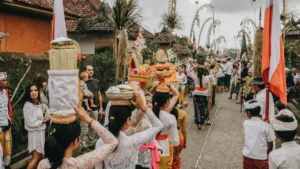
There is an uncomfortable truth about travel. We do not just visit places. We affect them.
We affect prices. We affect neighborhoods. We affect which stories get told and which get ignored. We even affect how people present themselves, because being watched changes behavior.
Thoughtful design asks: how can a traveler enter without turning life into a stage.
Part of the answer is simple courtesy, but it goes deeper than manners. It is about consent. Asking before taking photos of people. Knowing when a ceremony is not for you, even if you can technically stand there. Understanding that “welcome” does not always mean “available.”
Another part is money flow. Who owns the business you are supporting. Who benefits. A place can look thriving while the people who live there feel squeezed out. You cannot solve that alone, but you can make choices that lean toward local ownership and fair labor when it is visible.
And then there is behavior in shared spaces. Volume. Clothing. How you move through crowded streets. These are not moral tests. They are signals. They say, I recognize that this place has its own dignity.
That is why culture in travel is also an ethical guide. It teaches you how to take up space with care.
Destination Context That Changes How You See Everything
Context is not a lecture. It is a lens. And it changes how you interpret the same scene.
In Japan, many visitors notice precision first: quiet trains, clean streets, a strong sense of order. It can be tempting to call that strictness. But spend time with it and you may notice something softer underneath: consideration. A deep habit of reducing friction for others. If you understand that, politeness can feel less like distance and more like respect.
In Morocco, you might feel hospitality quickly. Sometimes intensely. You might also meet negotiation as a normal daily art. If you arrive expecting fixed prices and minimal conversation, bargaining can feel exhausting. But if you understand the social role it plays, it becomes less of a fight and more of a relationship, even when you choose to walk away.
In Indonesia, harmony often shapes how people communicate. Direct confrontation is frequently avoided, not because people are insincere, but because relationships are treated like a shared room. You do not punch holes in the walls of the room if you want everyone to keep living there comfortably. Once you see that, indirectness starts to make sense. You learn to listen for what is implied.
These are not rules that apply to every person, of course. People are people. Still, patterns exist. They come from history, religion, economy, family structures, climate, colonization, migration.
A good journey does not flatten those patterns into stereotypes. It uses them as starting points, then invites you to observe what is true in front of you.
Small Practices That Invite Deeper Encounters
If you want travel to feel more grounded, you do not need to do anything extreme. You can try a few practices that are simple but surprisingly powerful.
Learn five phrases and use them even when you pronounce them badly. It signals effort, and effort opens doors. People can be generous when they see you trying.
Ask questions that are not optimized for efficiency. Instead of “What should I see,” try “What do you do on a normal weekend,” or “What do you miss when you are away,” or “What changed here recently that visitors do not notice.”
Eat ordinary meals. Not only the famous restaurant. The small places where people eat quickly, or slowly, depending on the local rhythm. Watch what gets shared. Watch who serves whom first. Those details are not trivia. They are values made visible.
Follow local timing for one day. Wake when the city wakes. Rest when the city rests. You will feel the place in your body, not only in your camera roll.
Choose one theme to track gently. Coffee. Textiles. Street music. Migration stories. Architecture. A theme helps your mind connect dots across days.
This is how meaningful cultural travel happens in real life. Not as a badge. More like a gradual shift in what you notice, and what you respect.
Experiences That Often Feel Real, Not Staged

Some experiences tend to carry cultural depth without feeling like theater.
A market visit with someone who actually shops there. Not a performance where every stall becomes a photo stop, but a real walk with real decisions. Which ingredients matter, and why. What people buy for guests. What they buy when money is tight.
A cooking lesson that starts with a story, not a recipe. Where the dish sits in daily life. When it is eaten. Who usually prepares it. What changes during celebrations. Food becomes a map of relationships, not only flavors.
A craft workshop linked to a living tradition, where the teacher talks about time and patience as much as technique. Batik, weaving, ceramics, wood carving. You start seeing how identity can live inside materials.
A neighborhood walk focused on change. What is being renovated. What is disappearing. What people argue about. The present is always talking to the past, and you can hear it if you stop rushing.
And festivals, when you approach them with humility. Ask where to stand. Ask what not to photograph. Ask what is appropriate to wear. Those small questions are not awkward. They are respectful. Respect often creates a kind of quiet trust.
A Soft Closing, Because Travel Is Not A Contest
If you are planning a trip, you do not need to turn it into a project. You can still rest. You can still enjoy beauty. You can still do the famous view.
Just try adding one intention. Let culture in travel guide one decision each day. One meal. One conversation. One hour in a place that is not optimized for visitors.
And when you come home, notice what remains.
If you can explain not only what you saw, but why it made sense there, you have done something valuable. Not because you collected more. Because you understood more.